Security1 distinct publisher2 min readPublished
OpenAI, Microsoft, AWS, CrowdStrike and Visa are among the signatories. The letter's language about a closing window is the kind that ends up in procurement decks aimed at critical infrastructure operators who cannot fund it.
The Watch · Security desk

Compiled by The WatchSomething wrong?How this is made
The document reads as a duty roster with four addressees [19]. Every organization is asked to make security an immediate leadership priority, fix its highest-risk weaknesses, and raise standards for technology it buys, builds and deploys, AI-generated code included [11]. Security vendors and technology partners are asked to test their own defenses against frontier AI capabilities and to make AI-powered defense accessible to critical infrastructure operators [12]. Governments are asked to coordinate defense across borders, fund protection for essential services short of staff and budget, and impose costs on attackers [13]. Frontier AI companies are asked for responsible model access, funding, training and support, and to keep AI systems acting autonomously traceable and accountable [14].
Six categories of exposure sit underneath all of that, and each is pre-AI hygiene [18]: the patching, permissions and legacy-debt backlog operators have carried for years. The letter says status quo security will not be enough [7], and the failures it enumerates are the same ones defenders were already losing to.
The figure that will travel is the timeline. CyberScoop describes the letter as positioning the industry in a two- to three-year period of upheaval [15], which is 24 to 36 months [17]. Nothing in the letter ties that number to a funding commitment or an enforcement mechanism, in either direction. The reporting carries no dollar amount attached to the funding asks, no delivery date on accessible AI defense for utilities, and no named actor, campaign or malware family behind the threat half of the argument [20].
The stated basis for the urgency is Palo Alto Networks' account of its internal frontier model testing and of malicious in-the-wild use of commercially available AI tools [9]. That account comes from a vendor describing work it has not published, material a defending team cannot turn into a detection or a patch order.
On the government side, part of the ask already exists. Gold Eagle, a federal clearinghouse for sharing AI cyber threat information between government and the private sector, was stood up under an executive order President Trump issued in June [16]. Organizers say the signatory list is still open and expect more names [6]. So the Washington portion of this letter is less a request for new machinery than a request to fund and widen a channel that already runs, and the operators the letter identifies as the intended beneficiaries are the ones with the least ability to wait for either [4].
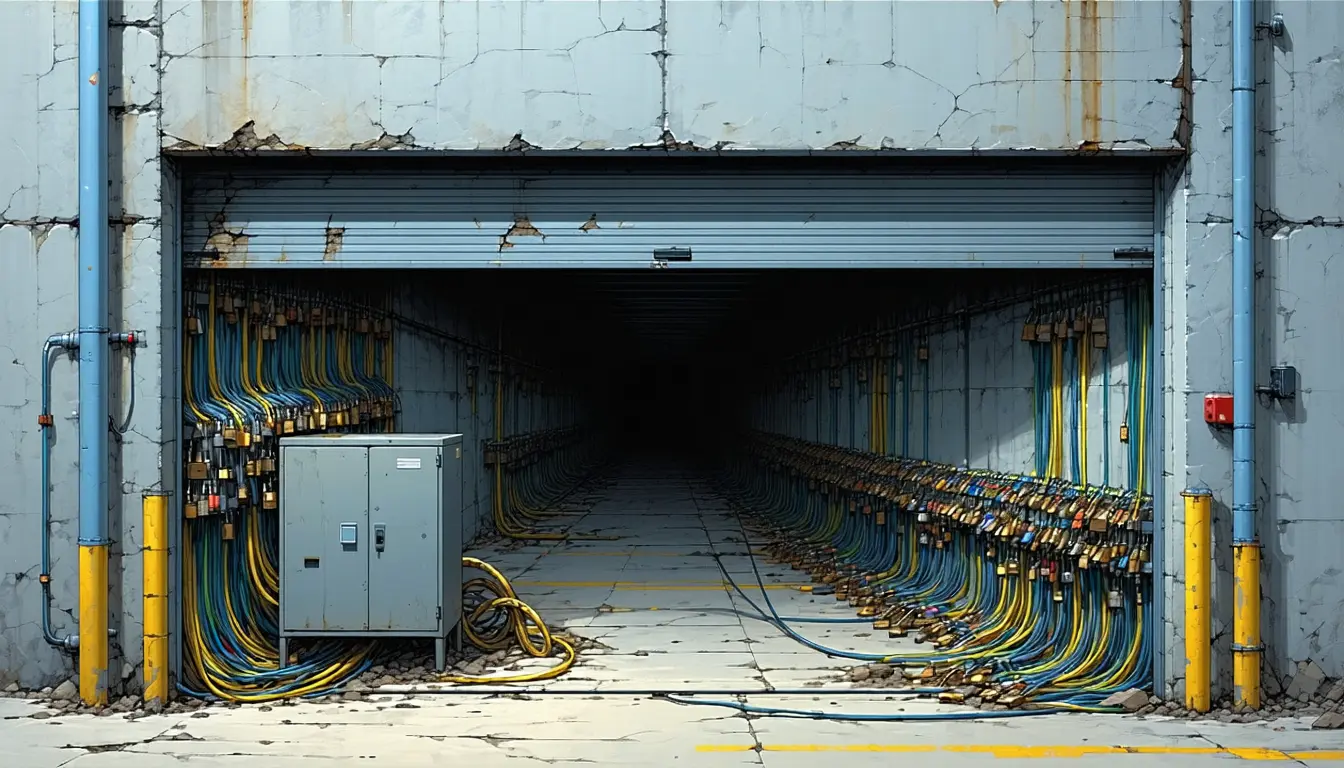
Ranked by verification strength, evidence, and original report placement.
More than 100 companies and organizations, including OpenAI, Anthropic, Google, Microsoft and Amazon Web Services, signed an open letter calling for a global effort to improve cybersecurity defenses as artificial intelligence capabilities advance.
The letter was published Thursday and argues the timeframe to strengthen defenses before AI-enabled attacks become more widespread and complex is rapidly dwindling.
The letter says AI advances can also give defenders new ways to find and fix vulnerabilities accumulated over years, a period the signatories call a "defenders' window."
Signatories beyond AI-centric companies include Capital One, Mastercard and Visa, and cybersecurity firms CrowdStrike, Palo Alto Networks and Proofpoint.
Palo Alto Networks leadership told CyberScoop on Wednesday they had seen enough from internal frontier AI model testing and from malicious in-the-wild use of commercially available AI tools to be genuinely concerned.
Sam Rubin, senior vice president of Palo Alto Networks' threat intelligence arm, said Wednesday: "I can tell you without exaggeration that we believe that this is a generational shift in cybersecurity."
Distinct publishers with included, body-backed reporting in this cluster.
2 articles · August 27, 2026
Follow any of these and your For You feed starts watching them — no settings page required.
product
CrowdStrike and Fortinet co-sign a letter that dates the security tooling they sell4 distinct publishers
product
Washington's secret AI test is coming for open weights, and release dates go with it2 distinct publishers
build
Agent Plugins 1.0.0 standardises file paths. Anthropic still owns the behaviour.1 distinct publisher
build
Grok 4.6 lands in Copilot two days after launch, and the model picker becomes a procurement problem1 distinct publisher
Evidence-backed comparisons of source perspectives and observed adoption signals. Read the methodology
Which Builder, Operator, and Investor concerns the observed source mix emphasized—not a truth score.
Evidence, demonstrated adoption, hype gap, incentives, and confidence are assessed independently, each on its own current evidence. How these are measured.
Primary document quoted, nothing measured
The cluster rests on one article (plus an exact duplicate) from a single publisher, which quotes the letter directly and adds a named on-the-record interview — that supports what the document says and who signed it. It supports nothing about the underlying threat: no named threat actor, campaign or malware family, no disclosed results from the 'internal frontier AI model testing' cited as motivation, and no measurement behind the vulnerability-discovery rate or the 24-36 month horizon.
Signatures, not deployments
Adoption here is signature adoption: 100-plus organizations, including the largest frontier labs, payment networks and security vendors, publicly attached their names, and one government information-sharing clearinghouse (Gold Eagle) exists as an adjacent artifact. Nothing in the cluster shows a budget committed, a product made accessible to a critical infrastructure operator, a control implemented, or a single organization changing practice as a result — the asks are qualitative and open-ended.
Urgency language outruns disclosed substance
The rhetorical register — a closing 'defenders' window', 'status quo security won't be enough', 'generational shift in cybersecurity', an unprecedented 24-36 month upheaval — sits well above what is actually disclosed: six ordinary hygiene failure categories as the named exposure, no adversary, no metric, no money and no date. The gap is overstatement of specificity and imminence rather than fabrication; the coalition and the document are real, and the hygiene diagnosis is plausible and consistent with long-standing practice.
Sellers defining the buy
The signatory set includes the firms that would supply the surge being demanded: frontier AI labs asked to sell 'responsible model access', and security vendors CrowdStrike, Palo Alto Networks and Proofpoint asked to make AI-powered defense accessible to critical infrastructure. The one interviewed voice supplying the urgency quote is a Palo Alto Networks executive, and the letter explicitly asks governments to fund buyers who lack budget — i.e. to underwrite demand. The coverage reports this structure without examining it, but the structure itself is on the record.
Solid on the document, thin on the world
Confidence is high that the letter exists, says what is quoted and carries the named signatories: the reporting is direct, dated, quotes the primary document and includes an attributed interview. Confidence is low on everything the letter asserts about threat trajectory and on any downstream effect, because the cluster is one publisher duplicated twice with no independent verification and no data behind the central timeline.