Published · 2h agoScience2 min read
The ocean's hottest day on record landed in August, and that is the number that matters
Copernicus logged 21.10 C on Aug. 22, one hundredth of a degree above March 2024. The timing, not the margin, is what should move planning assumptions.
Written for builders.See today for builders
What happened
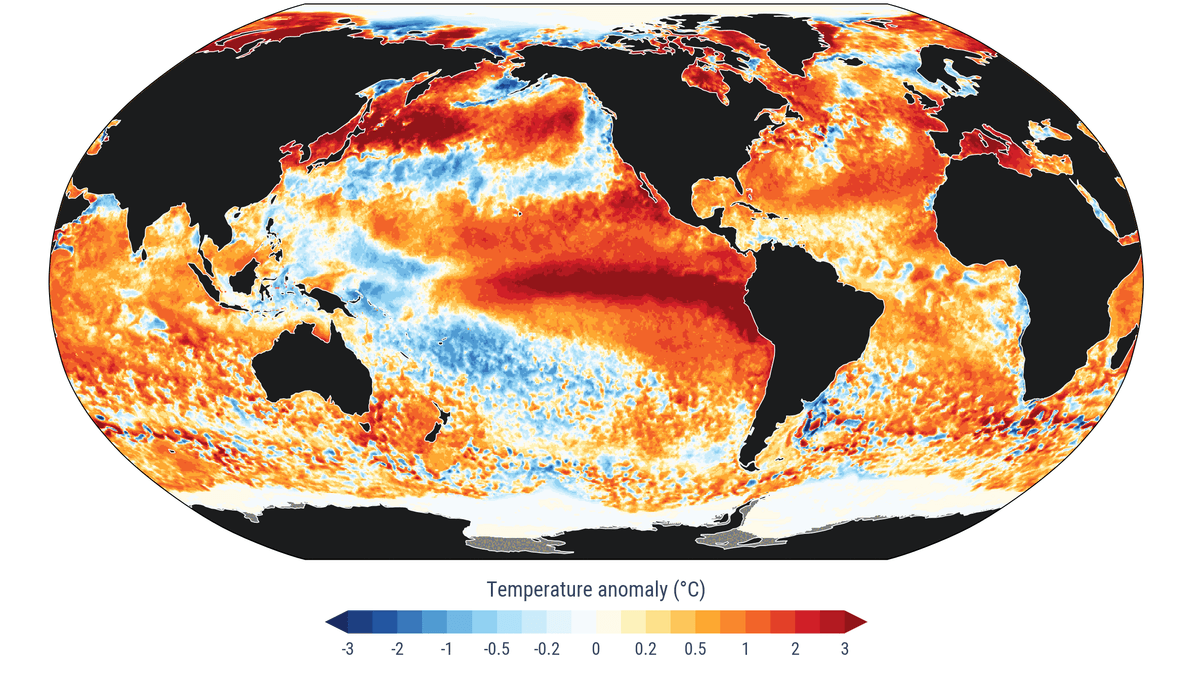
- Copernicus logged a daily global average sea surface temperature of 21.1 C on Aug. 22, the highest in a record that starts in 1979.
- El Nino was declared under way on June 11, and NOAA's Climate Prediction Center gives better than 90% odds of very strong conditions in fall and winter.
- The Met Office says this El Nino will be the largest in living memory and probably the biggest since the 19th century.
Compiled by The ScientistSomething wrong?How this is made
Why it matters
- constraintAny envelope calibrated on pre-2024 sea surface temperatures no longer contains the observed case, and the June and July monthly records mean it cannot be dismissed as one satellite day.
- exposureCopernicus names sea level rise, marine heat waves and coral reef damage as the transmission path to food webs and coastal communities; Labe extends the reach to the economy, coastal...
- contradictionCopernicus and the Met Office describe unprecedented strain and an unprecedented event, while Climate Central's Labe calls the record entirely unsurprising.
Claim ledger
Ranked by verification strength, evidence, and original report placement.
- [1]
Copernicus Climate Change Service reported that the daily global average sea surface temperature reached 21.1 C (69.98 F) on Saturday, Aug. 22, hotter than at any time since its records began in 1979.
ReportedView cited source - [2]
The previous high was 21.09 C (69.96 F), set in March 2024, according to C3S.
ReportedView cited source - [3]
2024 was the hottest year on record, and its sea surface temperature records were fueled by the previous El Niño, which was on the cusp of the 'super' threshold and so less extreme than what is forecast this time.
ReportedView cited source - [5]
Copernicus representatives said the hottest daily sea surface temperatures are typically recorded in March and April, after the Southern Hemisphere summer, making a record daily high this late in the year unusual.
ReportedView cited source - [8]
NOAA's Climate Prediction Center forecasts a more than 90% likelihood of very strong El Niño conditions emerging in the fall and winter.
ReportedView cited source
Sources & coverage · 2 publishers
The reporting this story was synthesized from, earliest first. Every link goes to the original.
- scientificamerican.com5h agoEarth's oceans just hit their hottest temperature ever recorded
- livescience.comPatrick Pester3h agoOcean 'under unprecedented strain' as El Niño helps supercharge warming to record levels