Published · yesterdayScience2 min read
Roman's launch date is now a planning input: Aug. 30, 7:26 a.m., one Falcon Heavy
NASA has cleared the Nancy Grace Roman Space Telescope for final preparations, which gives the dark energy and exoplanet community a firm Sunday morning and a single point of failure.
Written for builders.See today for builders
What happened
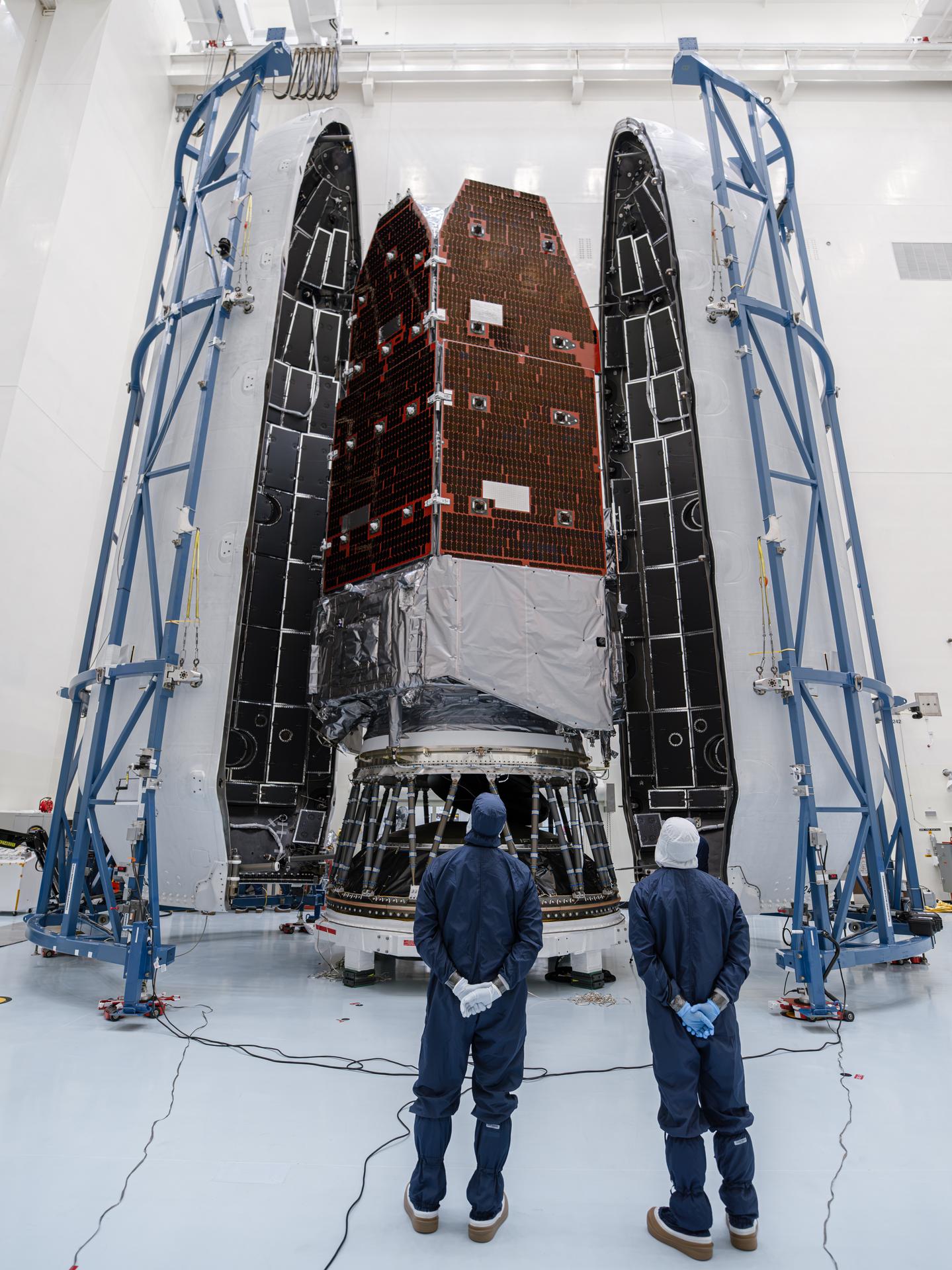
- NASA and SpaceX are targeting 7:26 a.m. EDT Sunday, Aug. 30 for Roman's liftoff on a Falcon Heavy from Launch Complex 39A at Kennedy Space Center.
- A Flight Readiness Review at Kennedy certified the mission ready to proceed with the work remaining before launch.
- Roman still has to be moved to SpaceX's hangar at pad 39A, connected to the rocket, and rolled out to the pad.
- After separation the observatory flies to the L2 point, about a million miles from Earth.
- NASA's launch broadcast starts at 6:20 a.m. Eastern.
Compiled by The ScientistSomething wrong?How this is made
Why it matters
- exposureBecause the archive is public, analysis plans well outside the mission team are now hostage to one Sunday ascent, and an observatory bound for L2 cannot be delivered incrementally.
- decisionA certified date turns staffing a Roman pipeline from a bet on a fiscal year into a bet on a morning, which is a commitment a manager can actually schedule against.
Claim ledger
Ranked by verification strength, evidence, and original report placement.
- [1]
NASA and SpaceX are targeting Roman's liftoff for no earlier than 7:26 a.m. EDT Sunday, Aug. 30, aboard a SpaceX Falcon Heavy from Launch Complex 39A at Kennedy Space Center in Florida.
ReportedView cited source - [4]
Roman pairs sharp infrared vision with a field of view at least 100 times larger than the Hubble Space Telescope's.
ReportedView cited source - [5]
Roman's surveys are intended to investigate dark energy and dark matter, discover and characterize exoplanets, map billions of galaxies, study black holes, and observe objects from the solar system to the edge of the observable universe.
ReportedView cited source - [6]
After launch and separation from the rocket, Roman will travel to the second Sun-Earth Lagrange point, L2, about one million miles from Earth.
ReportedView cited source - [7]
The mission has a five-year primary lifetime with a goal of operating for 10 years.
ReportedView cited source
Sources & coverage · 3 publishers
The reporting this story was synthesized from, earliest first. Every link goes to the original.
- sciencedaily.comyesterdayNASA is about to launch a powerful new eye on the universe
- nasa.govJessica TaveauyesterdayNASA Sets Coverage for Roman Space Telescope Launch from Florida