Product1 distinct publisher3 min readUpdated
Recall counts are running below 2025 and 2024, yet one supplier's salmonella now clears a dozen finished products at once, and the FDA has deferred the rule that would map the cascade.
The Product Desk · Product desk
Compiled by The Product DeskSomething wrong?How this is made
A recall tally counts notices, not food. That is why the arithmetic and the anxiety point in opposite directions this year.
The Poynter Institute's figure of 122 food and beverage recalls through July 31 sits 13 below the 135 logged in the same window of 2025 and 24 below 2024's 146 [8], which is roughly a tenth under last year and a sixth under the year before [9]. Darin Detwiler, professor emeritus at Northeastern, told The Verge that FDA data still shows recall activity elevated, and that "some individual recalls are affecting extraordinarily large quantities of food," because a few very large events can reach more consumers than dozens of small ones [7][12]. Edward Dudley, a food science professor at Penn State, put the sensation down to summer seasonality and heavier media pickup rather than a real rise in risk [10]. Both can hold. The unit of measurement is the notice, and the notice is a poor proxy for how far an ingredient travelled.
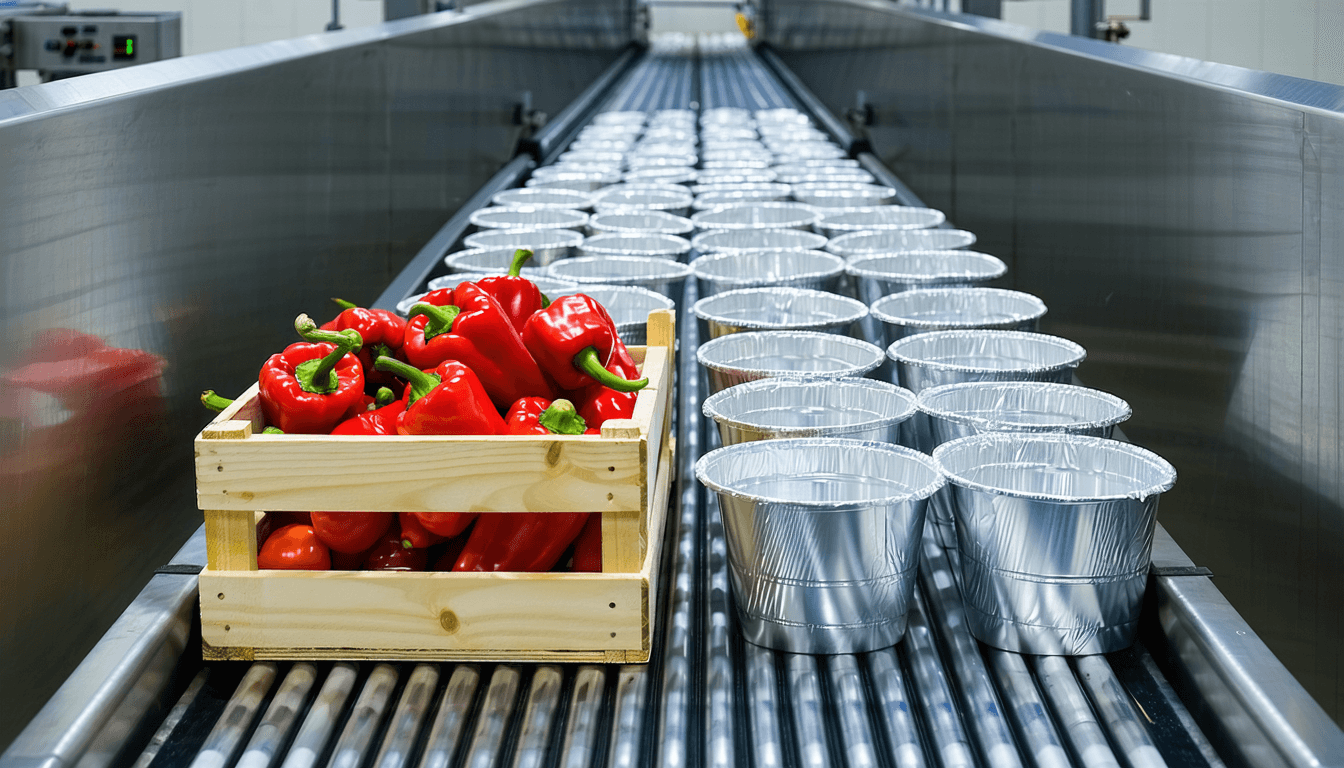
Coast Citrus Distributors is the clearest illustration. Its recall of fresh peppers over salmonella forced Taylor Farms to pull more than a dozen jalapeno-containing items, among them guacamole, salsa and taco dip [3]. One upstream lot decision, at least 13 finished products at a single customer [19]. Nobody buying taco dip knows the name of the pepper distributor, and the retailer's shelf tag does not carry it either.
The mapping from that lot to those 13 items is precisely what the FDA's Traceability Rule was meant to standardise through new record-keeping requirements, and the agency has delayed the compliance deadline [17]. So the mapping stays bespoke: built in whatever spreadsheets and ERP fields each processor happens to keep, and exercised for the first time under outbreak pressure.
Detection is thinning at the same time. The CDC dropped cyclospora, listeria and shigella from its surveillance programme last year [16]. Cyclospora is the pathogen behind the lettuce-linked outbreak that US PIRG associates with more than 9,000 illnesses, possibly the third largest foodborne outbreak on record [13]. The organism that produced this year's largest illness count is no longer one the federal system routinely follows.
Capacity is thinner still. FoodNavigator reported the FDA's budget down $271 million year over year, with more than 4,300 staff cut across 2025 and 2026 and more than 2,800 CDC jobs gone [14]; in February the Government Accountability Office described FDA staffing shortages against a rising inspection workload [15]. Fewer inspectors and a deferred records rule mean the trace work lands on the processor, who has to answer the only question that matters in hour one: which of my SKUs contain this lot. Detwiler's warning about recall fatigue curdling into trust fatigue [18] is the retail consequence of getting that answer slowly, twice in a season, across a dozen labels at once.
Follow any of these and your For You feed starts watching them — no settings page required.
Ranked by verification strength, evidence, and original report placement.
Taylor Farms issued a recall of its iceberg lettuce amid a massive cyclospora outbreak.
The FDA recalled more than one million eggs from Midwest Poultry Services that may be contaminated with salmonella; they were distributed to Kroger and smaller grocery stores across the South and Southwest US.
Taylor Farms pulled more than a dozen of its products containing jalapenos, including guacamole, salsa and taco dip, after its supplier Coast Citrus Distributors recalled fresh peppers due to salmonella contamination.
Frozen blueberries and mixed berries sold at Publix stores in multiple states were recalled over concerns about E. coli contamination.
Some Outshine fruit bars were removed for potential glass contamination, and dog food and eye drops have also been affected by recent recalls.
Altogether the recent recalls have sickened thousands of people, and some dogs, across the US.
Evidence-backed comparisons of source perspectives and observed adoption signals. Read the methodology
Which Builder, Operator, and Investor concerns the observed source mix emphasized—not a truth score.
Evidence, demonstrated adoption, hype gap, incentives, and confidence are assessed independently, each on its own current evidence. How these are measured.
Named experts and third-party counts, but one publisher and no primary documents
The single supplied article names two academic experts on the record, cites Poynter recall counts, a GAO finding, a US PIRG report and FoodNavigator reporting on FDA/CDC cuts. That is more than assertion, but every figure reaches the reader secondhand: no FDA or USDA recall notices, no PIRG methodology, no GAO document, and no corroborating publisher in the cluster. The recall events and the traceability deferral are concrete and specific; the outbreak-scale and 'huge increase' framings are not independently checkable here.
Real incidents documented; the traceability mandate that would trace them is deferred to 2028
There is concrete real-world incidence: a million-plus egg recall, multi-state berry recalls, and one supplier recall clearing more than a dozen finished products. What is not adopted is the mechanism the story hinges on - the Food Traceability Rule's record-keeping requirements, whose enforcement moved from January 2026 to 2028, so industry-wide lot-level traceability is not in force. Combined with CDC dropping cyclospora, listeria and shigella from surveillance, uptake of the detection and tracing apparatus is low even though the events are real.
Cluster framing outruns the counts the article itself reports
The cluster headline calls this a 'recall wave' and a 'traceability failure', and the article's own question is whether recalls are 'out of control'. The reported data cuts the other way: 122 recalls through July 31 against 135 and 146 in the same 2025 and 2024 periods, with Dudley explicitly attributing the perception to summer seasonality and media amplification rather than rising risk. The overstatement is modest rather than severe because the article surfaces those counterpoints itself and because the scale argument (a 9,000-illness outbreak, a dozen SKUs from one supplier, a deferred traceability rule) is genuinely supported.
Mostly low-stake academic and data sources, with one advocacy-group amplifier
The two substantive voices are university academics with no disclosed commercial stake, and the recall counts come from a journalism institute. The largest claims - a 'huge increase' in outbreaks and the third-largest-outbreak ranking - come from US PIRG, an advocacy organization whose mission benefits from emphasizing rising foodborne risk, and the agency-cut figures are relayed from a trade outlet. Companies whose products were recalled are given no voice, so the incentive mix leans toward parties favoring an alarming reading, while the publisher's own traffic incentive on a viral consumer-safety topic is partly offset by its inclusion of the deflating recall counts.
Specifics are solid; the causal traceability thesis is single-source
Confidence is moderate. The discrete, checkable facts - the recall events, the Poynter counts, the Traceability Rule deferral to 2028 - are stated precisely and are consistent within the source. But there is one publisher, several key numbers are relayed from third parties without primary links, dates for individual recalls and the rule delay announcement are absent, and the central claim that this year's pattern constitutes a traceability failure is an editorial synthesis rather than a documented finding.
product
Three Salmonella Outbreaks, One Failure Mode: Nobody Knew Where the Ingredient Went1 distinct publisher
leadership
Detection got faster than tracing, and the produce buyer now owns the recall1 distinct publisher
security
USPS finalizes federal mail-ballot eligibility rules while two injunctions stand1 distinct publisher
product
Walmart caved on tap to pay, and would not say Apple's name9 distinct publishers
Distinct publishers with included, body-backed reporting in this cluster.
1 article · August 21, 2026