Loading today’s stories
Security1 distinct publisher2 min readUpdated
Counter-drone authority grew in Washington. The risk still sits with the operator.
AUVSI's chief executive told a critical-infrastructure institute that expanded counter-drone powers are progress and not enough. The interval belongs to operators.
The Watch · Security desk
What happened
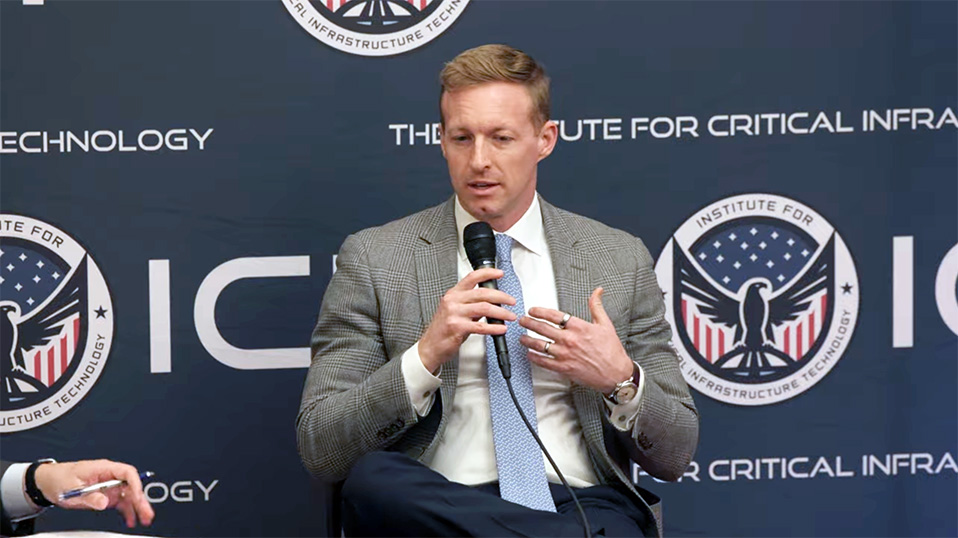
- AUVSI CEO Michael Robbins participated in a June 10, 2026 discussion at the Institute for Critical Infrastructure Technology (ICIT) in Washington.
- Robbins said advances in autonomous systems, drone threats and AI-enabled warfare have consistently outpaced the policies and laws intended to govern them.
- Recent federal actions seek to narrow that gap, including a directive calling for faster AI adoption across the national security enterprise and an update to longstanding policy governing lethal autonomous systems.
- Robbins said recently expanded counter-drone authorities represent progress but remain insufficient.
- The discussion framed the policy gap as bearing on critical infrastructure and major public events.
Compiled by The WatchSomething wrong?How this is made
Why it matters
The load-bearing word is "insufficient," and the record around it is bare [4]. Nothing in the account identifies which counter-drone authorities were expanded, which parties they reach, or when they lapse [8]. For whoever runs a water system or a large venue, that absence is the operational problem rather than a footnote. A response plan has to cite a permission, and "recently expanded" is not a citation.
The two federal moves offered as evidence of catching up both point inward [3]. A directive to accelerate AI adoption across the national security enterprise and an update to the longstanding policy on lethal autonomous systems concern how the government itself fields autonomy [3]. Neither is described as touching the question a control room faces, which is what may be done about an aircraft over a crowd [6].
The framing carries an interest, and it is worth stating plainly: Robbins runs AUVSI, and he was speaking at an institute whose remit is in its name [1]. An executive arguing that law trails technology is also arguing for a wider operating envelope for that technology. It does not make the diagnosis wrong. That drone threats and AI-enabled warfare have outrun the policies written for them is not contested from either direction [2].
What the gap does in practice is move responsibility without moving authority. The party physically present when something flies over the fence is the party that answers for it afterward, and an expansion of federal authority, wherever it landed, does not relocate that answer [4][5].
There is a second edge to a publicly acknowledged gap. Once people inside the policy conversation say the rules trail the threat [2], the question after an incident stops being whether the operator held authority and becomes what the operator did with what it could see. Detection is the part that needs no new permission, and it is also the part that produces logs, alerts and timestamps that a plaintiff or a regulator can read back. Operators buying sensing to demonstrate diligence are building the evidence file for the interval in which they had knowledge and no remedy.
Until an expansion names non-federal operators in text they can hand to counsel, "progress" describes Washington's paperwork rather than anyone's risk position [4][6].
Topics and entities
Follow any of these and your For You feed starts watching them — no settings page required.
Topics
Loading related stories