Loading today’s stories
Build1 distinct publisher3 min readUpdated
The matte refiner gets a strip, not the car: a runtime limit on learned correction
CarSegNet confines its alpha refiner to an uncertain edge band and freezes the prior outside it. The interesting part is the ceiling on how wide that band can grow.
The Engineer · Build desk
What happened
- CarSegNet is described as the research implementation behind the described vehicle-cutout pipeline.
- The stated rule is physical: edit the uncertain strip, leave the settled area alone; the refiner edits the uncertain strip and the semantic prior owns the rest of the frame, with the prior frozen outside the band.
- The author wanted the last correction stage to fix fuzzy edges without handing it the whole car to rewrite, and says the distinction stops being small the first time a model improves one boundary and quietly damages another.
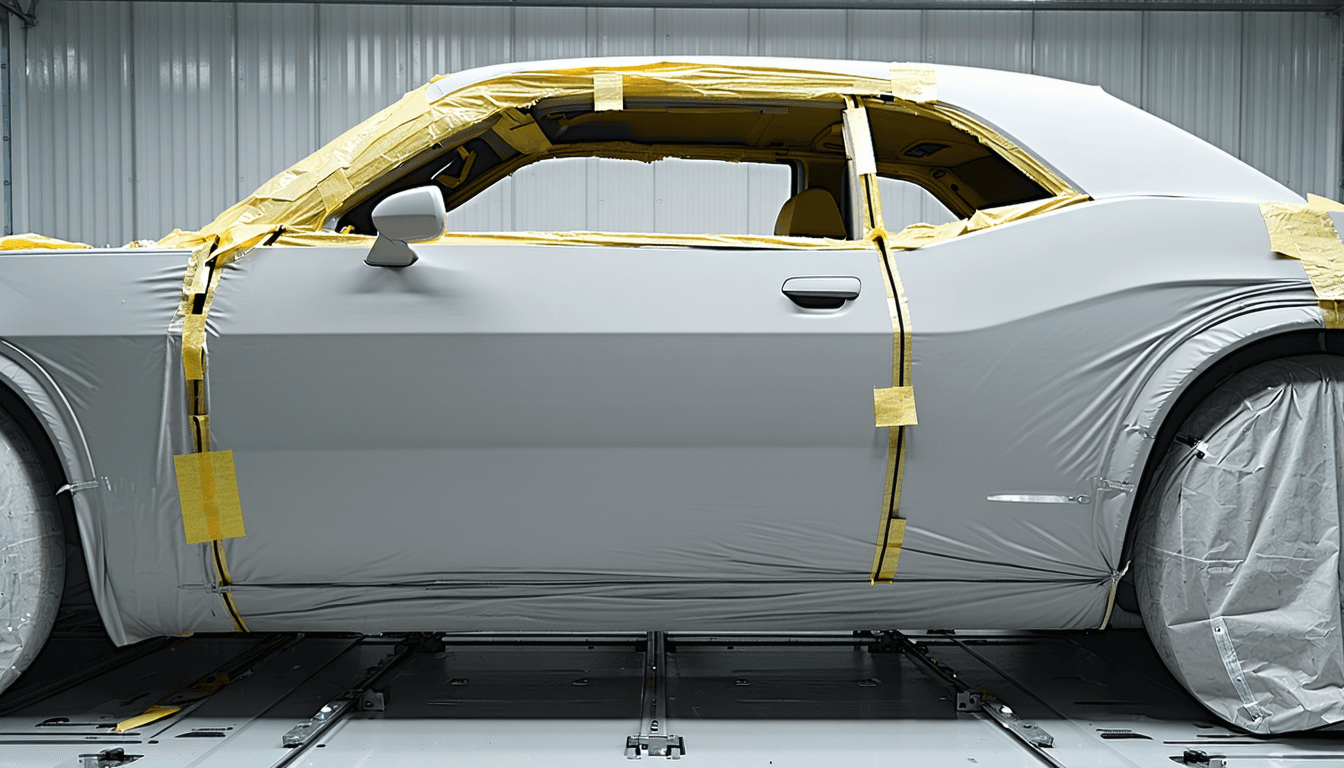
- A bad cutout rarely announces itself; the car lands on a new backdrop, the paint looks clean, then a thin piece is gone: an antenna, a tire lip, the dark seam under a rocker panel.
- The complaint that comes back is never technical; it is that the vehicle looks wrong.
Compiled by The EngineerSomething wrong?How this is made
Why it matters
A writeup on CarSegNet, a research implementation for vehicle cutouts, sets a rule for its final correction stage: the learned refiner edits only the uncertain strip along the boundary, and the semantic prior owns the rest of the frame [1][2]. That is a containment decision rather than a quality one, and the author states the reason plainly, that the distinction stops being small the first time a model improves one boundary and quietly damages another [3].
The failure it is defending against is not loud. According to the writeup, a bad cutout shows up as a missing antenna, a tire lip, or the dark seam under a rocker panel, and the complaint that comes back is never technical: the vehicle looks wrong [4][5].
The pipeline splits by media type. Stills run SAM 3 text concept, then NSJ alpha, then composite, with a detector box prompt and a depth prior as optional inputs [6]. Video runs SAM 3.1 multiplex propagation, per-frame NSJ with temporal handling, a depth-parallax plate, composite, encode [7]. The author argues the handoff matters more than the list: SAM supplies a semantic prior, NSJ receives a trimap band, and the compositor receives a matte only after prior and refiner have each done bounded work [8]. On both routes the refinement step sits between the prior and the composite [9]. The refiner module's own one-line description is given as the whole design: trimap, band crop, NSJ, or deterministic fallback [10].
The band is where the engineering actually is. A morphological band comes free from the prior: grow the hard mask, shrink it, call the ring unknown [11]. That catches soft contour error and fails on a prior that is confidently wrong [12]. Both halves of that band are functions of the prior, so a prior with no doubt produces no band at all [13]. The writeup names the case in capitals in the band builder, WRONG AND CONFIDENT, and gives the two shapes it takes: a filled wheel opening becomes confident foreground, a dropped roof antenna becomes confident background, and either way the missing region can sit nowhere near an iso-contour where morphology would look [14][15].
So CarSegNet adds an image term. Where the photograph shows strong structure and the prior shows nothing, that disagreement opens the band [16]. It is fenced three ways: the search is restricted to the subject's own neighborhood, the edge criterion is relative to the image rather than a fixed number, and the band has a ceiling it cannot cross [17]. The tradeoffs are stated rather than hidden. Widen the neighborhood and foliage, fence lines, and lot texture start lighting up the image term; tighten it and the antenna case stays frozen [18]. The author says the ceiling is the limit they would defend hardest, because it stops a local repair path from becoming a full-frame request, which forces a badly wrong prior to be rejected upstream instead of passed to the refiner as though it were close [19].
The alternative is one step shorter: rough mask, neural refiner outputs a full alpha, composite from that alpha. Fewer moving parts and, in the author's framing, far more hidden authority, since a full-frame output can fix a tire edge and move a roofline in the same pass [20][21].
One operational detail travels with this. Models build lazily, so a pure recomposite against cached mattes never pays to load a large segmentation checkpoint, and the cost lands on whichever execution path needs that model first [22]. The author accepts that trade on the grounds that loading every model for every run hides an orchestration problem behind hardware capacity [23].
Worth watching: whether the ceiling holds when a prior is wrong by more than a strip, and what the upstream rejection path looks like when it does.
Topics and entities
Follow any of these and your For You feed starts watching them — no settings page required.
Topics
Loading related stories