Loading today’s stories
Science1 distinct publisher3 min readUpdated
A two-payload nanoparticle closed simulated wounds in 72 hours. In a dish.
USP researchers combined MMP-9 gene silencing with resveratrol in one hydrogel-bound lipid particle. The data is cell culture and pig skin, so treat it as a pipeline signal.
The Scientist · Science desk
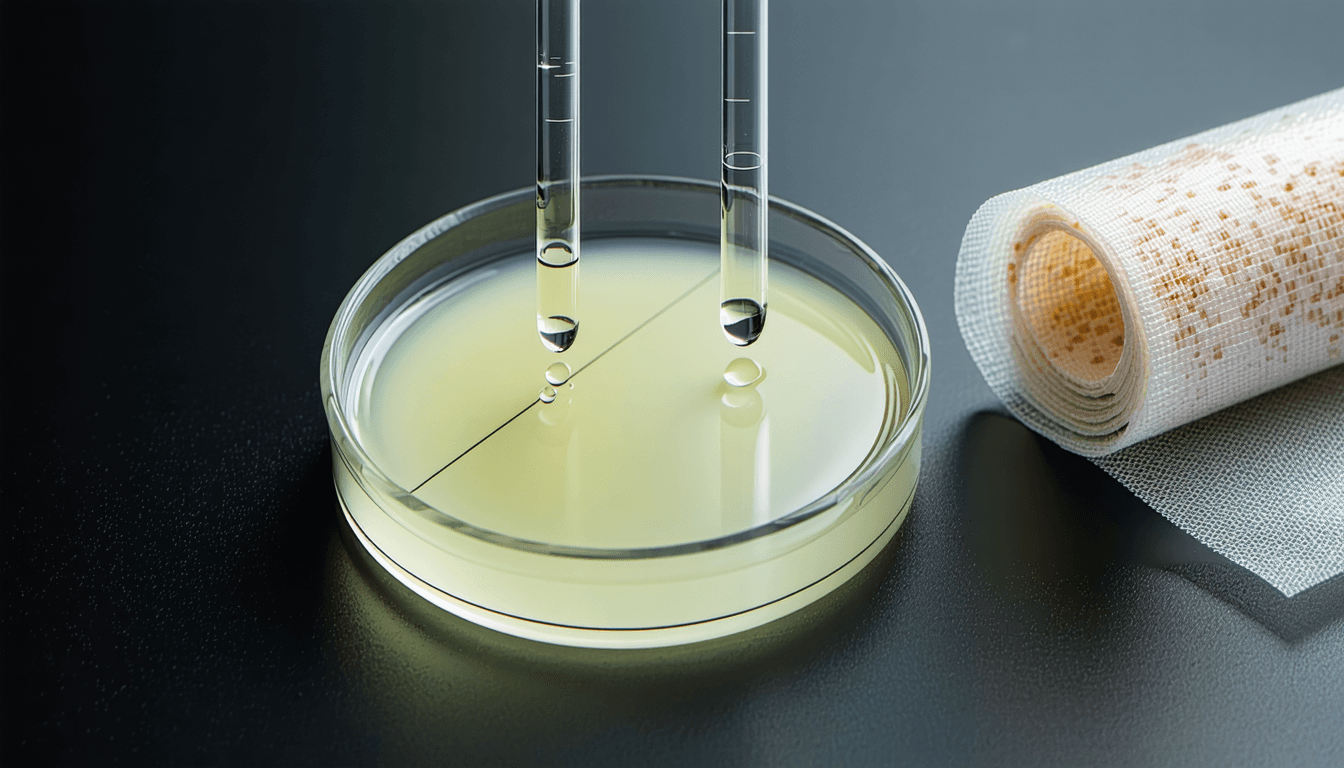
What happened
- Researchers at the University of Sao Paulo (USP) in Ribeirao Preto, Brazil, at the Ribeirao Preto School of Pharmaceutical Sciences (FCFRP), developed a nanoparticle intended to address the various factors hindering healing of chronic wounds.
- Chronic wounds include ulcers associated with diabetes and pressure ulcers common among bedridden individuals.
- These wounds may persist for months or even years, affect about 1% to 2% of the population, and represent a significant public health concern because they increase the risk of infection and amputation and significantly impair patients' quality of life.
- In in vitro tests, the technology reduced inflammation and protected tissue from oxidative stress damage, and the formulation favored the migration of skin fibroblasts.
- The results were published in the journal Colloids and Surfaces B: Biointerfaces.
Compiled by The ScientistSomething wrong?How this is made
Why it matters
Researchers at the University of São Paulo's Ribeirão Preto School of Pharmaceutical Sciences have built a hybrid lipid nanoparticle that carries two complementary molecules aimed at the mechanisms that keep chronic wounds open, with results published in Colloids and Surfaces B: Biointerfaces [1][10][7]. Everything reported so far comes from cell cultures and excised porcine skin, so this is a signal about a pipeline for a condition affecting roughly 1% to 2% of the population, not a change in what goes on a wound next week [3][1].
The clinical problem is stated plainly by the group. Chronic wounds, including diabetic and pressure ulcers common among bedridden patients, can persist for months or years, raise the risk of infection and amputation, and degrade quality of life [2][3]. Current care is dressings, antibiotics and anti-inflammatory drugs, which control infection and inflammation but do not always halt the mechanisms holding the wound open [8]. According to Maria Vitória Lopes Badra Bentley, a pharmacist and professor at the school, several healing mechanisms fail at once: persistent inflammation, an excess of tissue-degrading enzymes, oxidative stress, and difficulty forming new skin [9].
The two payloads map onto two of those failures. One target is MMP-9, an enzyme that supports tissue remodeling at normal levels but, when overproduced in chronic wounds, degrades collagen, elastin and growth factors needed to rebuild skin [11]. The team used a small interfering RNA to silence the gene that produces it [12]. The second payload is resveratrol, chosen for antioxidant and anti-inflammatory activity and for promoting migration and proliferation of fibroblasts, the cells that make collagen and other extracellular matrix components [13]. First author Milena Finazzi Morais says resveratrol had already been studied for wounds and that the group's contribution was combining it with MMP-9 silencing on a single platform [14].
The delivery engineering is the less glamorous half and probably the harder half. Resveratrol is poorly water-soluble and degrades easily; siRNA is unstable and quickly destroyed by enzymes in the body [16]. The lipid nanoparticle is meant to protect both, improve penetration into skin layers and release the actives gradually [15]. Embedding it in a hydrogel raised viscosity and retention on the wound, and in cell culture and porcine skin experiments the formulation showed greater retention of the compounds in tissue and better delivery to the lesion site, Bentley says [17]. Porcine skin is used in dermatological research because its characteristics resemble human skin [18].
The reported effects: reduced MMP-9 production, lower levels of reactive oxygen species and inflammatory cytokines, and restored fibroblast migration [19]. In the in vitro wound-healing model, the full combination produced near-complete closure of the simulated lesion at 72 hours [20]. Bentley frames the multi-mechanism platform as the study's main strength [21]. That is a reasonable read of the biology, and also the point at which the evidence stops: a scratch assay closing in a dish is not a diabetic foot ulcer closing on a patient.
What to watch is whether the combination survives the next steps intact. The specific things to look for are in vivo results in impaired-healing models rather than cell culture, evidence on how long MMP-9 knockdown persists in tissue, and whether an siRNA-plus-resveratrol hydrogel can be made stable and manufacturable at scale, given both payloads' fragility [16][1].
Loading topic controls
Loading related stories