Loading today’s stories
Product1 distinct publisher3 min readUpdated
Level 4 shipped as a 6 km theme park shuttle, with a bus company co-managing it
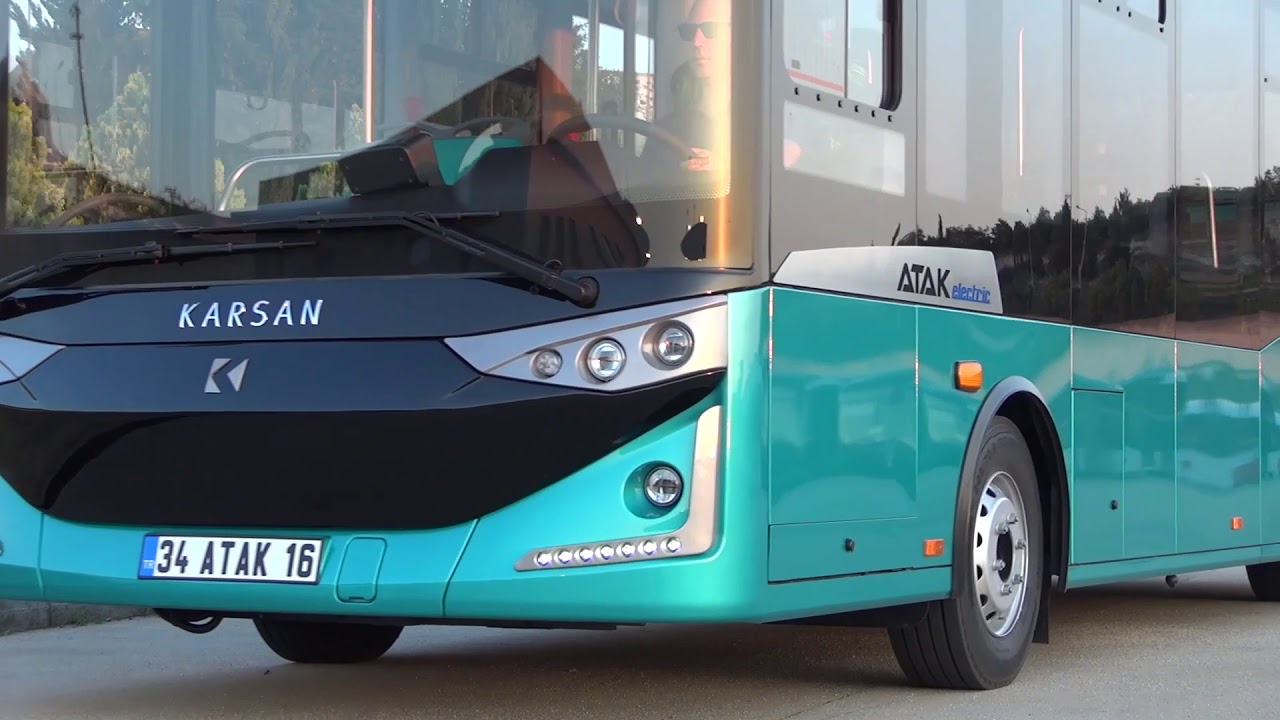
Karsan's driverless e-ATAK began carrying Efteling guests on August 12 under joint management with Arriva. The constraint is the product, not a limitation of it.
The Product Desk · Product desk
What happened
- Bursa-based Turkish automaker Karsan announced that its e-ATAK autonomous all-electric minibus will provide passenger service around the Efteling Theme Park in the Netherlands.
- The bus runs along a fixed 3.7-mile (6 km) route between the park's main entrance, the Wonder Hotel area, and other stops along the way.
- The service is free for paying customers of the park and comes with wheelchair access.
- According to reports, the e-ATAK is described as SAE Level 4, meaning the bus can drive itself without human control, but only on tightly controlled routes and environments.
- According to a press release, the service will be jointly managed by Karsan and Arriva.
Compiled by The Product DeskSomething wrong?How this is made
Why it matters
Karsan's autonomous e-ATAK electric minibus began carrying passengers on a fixed 3.7-mile route at the Efteling theme park in the Netherlands on August 12, two days after an official launch event [1][2][9][2]. Reports describe the vehicle as SAE Level 4 [4], which makes this a useful marker of how that label is actually reaching paying-passenger service: one mapped route inside a destination, with a conventional bus operator named as co-manager [5].
The geography is the whole design. The route runs between the park's main entrance, the Wonder Hotel area, and intermediate stops [2], roughly six kilometres of it [1], and Karsan says it is the first autonomous bus authorised on public roads in the North Brabant region [6]. Level 4 in this configuration means the bus drives itself without human control, but only within a tightly bounded route and environment, which in practice implies a specific mapped path under approved traffic, weather and speed conditions [4][7]. It does not mean the vehicle could drive anywhere in the Netherlands the way a human driver could [8].
Two structural details matter more than the autonomy claim. First, the service is jointly managed by Karsan and Arriva according to the press release [5]. A vehicle maker demonstrating a prototype and a transport operator putting a shuttle into a guest-facing schedule are different commitments; the second one involves timetables, complaints and wheelchair boardings. The service is wheelchair accessible and free to guests who have already paid for park admission [3], which quietly deletes fare collection, fare disputes and payment hardware from the operational surface. Efteling receives millions of visitors a year [10], so the volume is real even if the route is not.
Second, the supply chain is split. Karsan provides the bus and ADASTEC, another Turkish company, provides the autonomous driving system [11]. That separation is how this segment is likely to scale: an existing bus platform, a retrofit-style driving stack, and an operator that already runs the depot.
The open question is supervision. Interesting Engineering reports it is unclear whether a safety operator is required onboard or whether the system is remotely monitored, and notes that Level 4 permits driverless operation within its designated conditions while still allowing onboard staff or remote supervision, particularly in an early public trial [12]. Until that is disclosed, the unit economics are unknowable. A Level 4 bus with a staffed seat is a driver-assist bus with better press.
This is Karsan's second autonomous deployment in the Netherlands, following Rotterdam The Hague Airport [13]. Both serve single-site campuses rather than a general city network [3], which is the tell: the commercial path runs through venues that own their own roads and their own risk appetite.
What to watch: whether Karsan or Arriva publishes the supervision arrangement and any uptime figures; whether the service holds through Dutch winter weather, since the operating envelope is defined partly by weather conditions [7]; whether Arriva folds the route into its scheduled network rather than treating it as a showcase; and whether the next authorisation extends the mapped route instead of adding a second closed one.
Loading topic controls
Loading related stories