Loading today’s stories
Invest1 distinct publisher3 min readUpdated
Korea's grid peak ran 23 GW under forecast. The real test is a cloudy, humid late August
Peak demand hit 75.99 GW on August 15 against a 98.8 GW official projection. The number that matters is solar's 14.3 GW swing between a sunny peak and a rainy holiday.
The Investor · Invest desk
What happened
- Peak power demand in South Korea's electricity market reached 75.99 GW on August 15, according to the Korea Power Exchange.
- Authorities had initially projected that this year's peak demand would climb to 98.8 GW.
- The all-time high for Korean peak power demand is 97.12 GW, recorded in the summer of 2024.
- Daily peak demand first entered the 90 GW range on August 3, at 91.1 GW.
- Daily peak demand reached this year's high of 95.3 GW on August 7, four days after first entering the 90 GW range.
Compiled by The InvestorSomething wrong?How this is made
Why it matters
South Korea's daily peak power demand in the electricity market came in at 75.99 GW on August 15, according to the Korea Power Exchange [1], against a pre-summer official projection that this year's peak would climb to 98.8 GW [2]. That is 76.9 percent of the forecast [20], and the gap says less about forecasting accuracy than about which variable actually decides whether the grid has a bad week.
The heat itself behaved as expected. Daily peak first crossed into the 90 GW range on August 3 at 91.1 GW, then set this year's high of 95.3 GW on August 7 [4][5]. Typhoons forming around the peninsula then broke up the heat-dome high and temporarily pulled temperatures down [7], and reduced industrial load during the summer vacation season contributed as well [8]. Since August 7, daily peaks have moved sideways in a 76 to 83.7 GW band [6].
On paper the headroom is comfortable. Summer supply capacity secured by authorities stands at 107 GW, and experts quoted by Seoul Economic Daily say even a sharp demand jump is unlikely to produce a large-scale blackout [9]. Measured against this year's high, that is 11.7 GW of slack, about 12 percent [21]. The all-time record is 97.12 GW, set in the summer of 2024 [3], which sits 1.82 GW, or roughly 2 percent, above the August 7 reading [22][10].
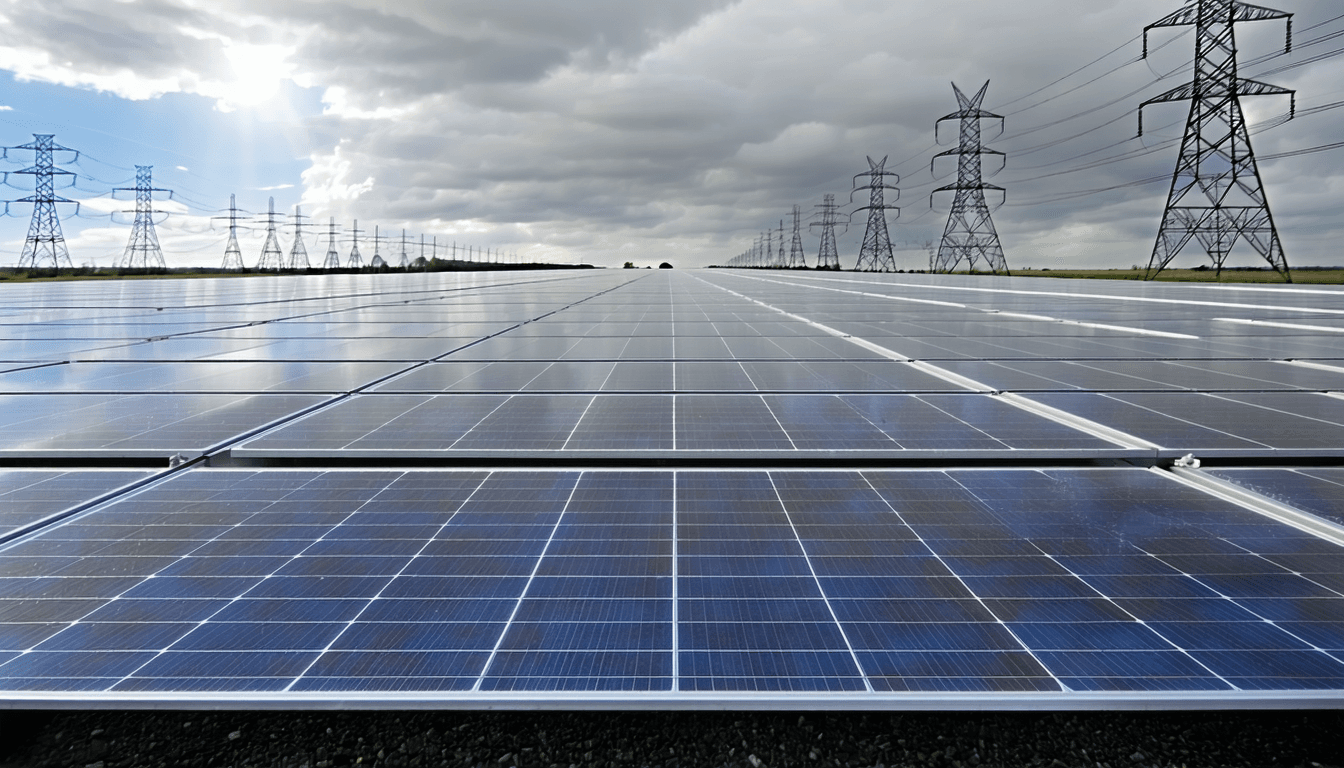
The number that deserves the attention is on the supply side. At 12:30 p.m. on August 7, solar output reached 26.4 GW, its largest share of the mix at 26.6 percent [11]. At noon on August 15, with rain clouds over the country, solar peaked at 15.6 percent of the mix and just 12.1 GW [12]. That is a 14.3 GW difference between two days nine days apart [23], consistent with the report's estimate that weather can move solar output by 10 to 15 GW, a gap that must be filled entirely by LNG or coal [13].
Both days so far this month have been correlated in the convenient direction: hot and sunny, or wet and mild. The combination that has not occurred yet is humid and heavily overcast without the rain that suppresses cooling demand. In that case, load near the August 7 level would arrive with solar at 12 GW rather than 26, leaving dispatchable plant to cover roughly 14 GW more than it did on the highest-demand day of the summer [23]. Analysts cited in the report make the same point in weaker form: cloudy, humid days are harder to manage because solar output falls while air-conditioning demand rises [14].
Near term, the Korea Meteorological Administration expects rain clouds left by Typhoon Dolphin, the season's 13th, and Typhoon Chanhom, the 15th, to drop up to 200 millimetres, mainly in southern regions, over the Liberation Day holiday [16]. Highs around 33 degrees Celsius nationwide, including Seoul, are forecast for the following week [17], and a renewed expansion of the retreating North Pacific high could restore the double heat-dome pattern [18]. Some forecasts put the summer's peak in late August, once the holiday rain stops, the heat returns and vacations end [15]. Authorities are running an emergency response system on the assumption that the year's high could be matched if the heat comes back [19].
Watch the noon numbers rather than the daily headline peak: load against solar share, and how much thermal ramp the operator has to schedule to cover a low-irradiance afternoon. A 98.8 GW forecast against 107 GW of capacity leaves 8.2 GW of margin [24], and a 14 GW solar swing is larger than that margin.
Topics and entities
Follow any of these and your For You feed starts watching them — no settings page required.
Topics
Loading related stories