Loading today’s stories
Product1 distinct publisher3 min readUpdated
OpenAI made age prediction the default gate, so its false-negative rate is now the product
ChatGPT for Teens routes users by a classifier's guess, not a signup choice. OpenAI has not published how often that guess misses a minor, and outside experts say it misses plenty.
The Product Desk · Product desk
What happened
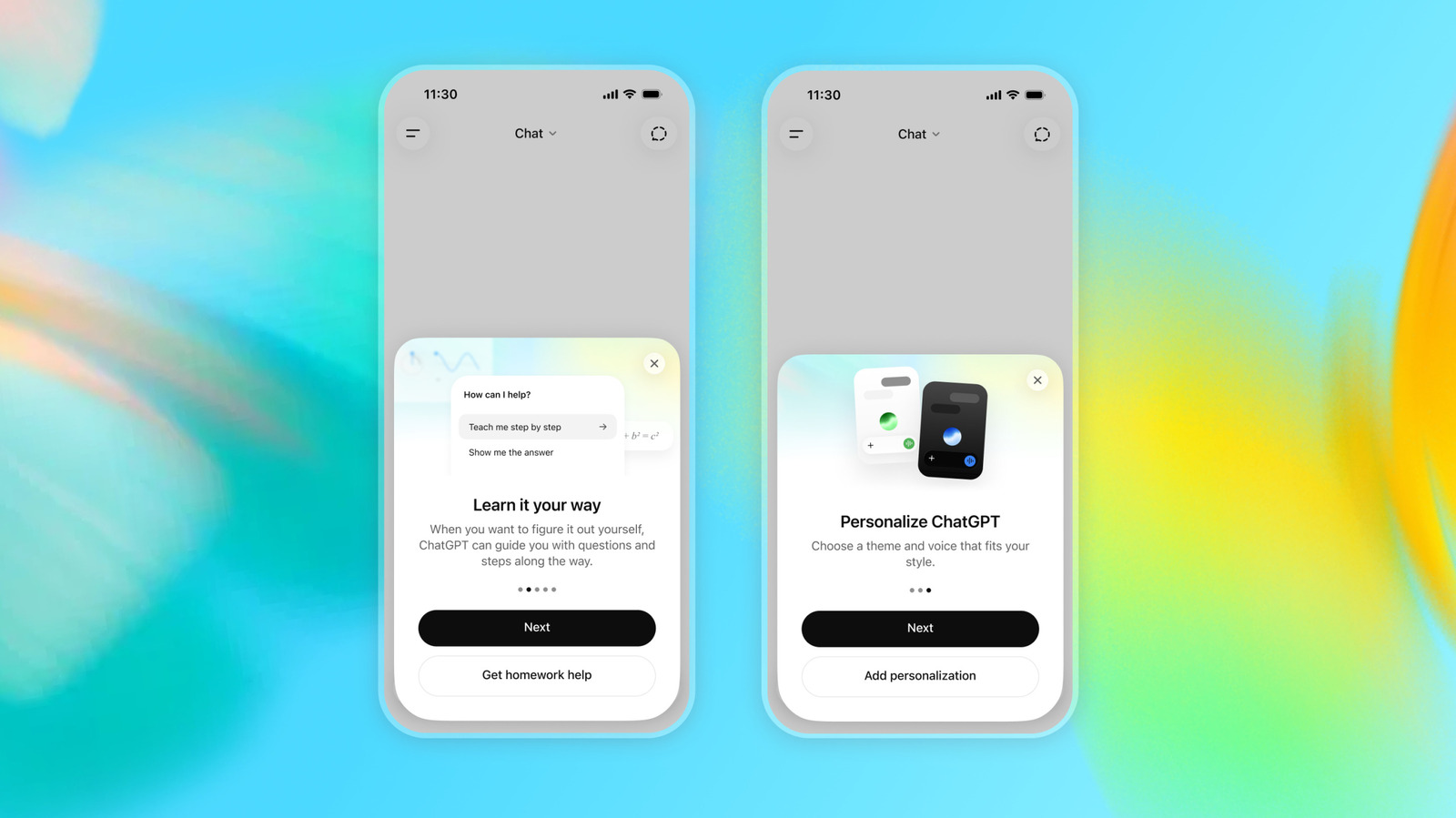
- On Tuesday, OpenAI released ChatGPT for Teens, an age-gated version of its chatbot designed for young users.
- Lauren Jonas, OpenAI's head of youth and families, told Engadget: "There's no need for a teen to create a new account or change anything; if we predict you're under 18, or you've told us so, this becomes your default experience."
- OpenAI first announced last September that it was working on a system to automatically identify teens and restrict their usage of ChatGPT, following the death of 16-year-old Adam Raine, who, as alleged in a lawsuit filed by his parents, took his own life after ChatGPT acted as an enabler.
- At the start of last year, the Pew Research Center found about a quarter of US teens were using ChatGPT for their schoolwork.
- The ChatGPT for Teens experience is designed to nudge users toward educational features OpenAI has rolled out over the last year, including Study Mode and data visualizations.
Compiled by The Product DeskSomething wrong?How this is made
Why it matters
OpenAI released ChatGPT for Teens on Tuesday, an age-gated version of the chatbot built for young users [1]. The consequential part is not the teen experience itself but the plumbing underneath it: Lauren Jonas, OpenAI's head of youth and families, told Engadget that "there's no need for a teen to create a new account or change anything; if we predict you're under 18, or you've told us so, this becomes your default experience" [2].
That sentence relocates age assurance from a settings screen to a classifier. Prediction is the primary path and self-declaration is the fallback, which means the model's guess about who you are now determines which product you get. OpenAI first said it was building automatic teen identification last September, after the death of 16-year-old Adam Raine, whose parents allege in a lawsuit that ChatGPT acted as an enabler in his suicide [3].
The scale question is not hypothetical. The Pew Research Center found at the start of last year that about a quarter of US teens were using the chatbot for schoolwork [4]. Teens routed into the new experience are nudged toward educational features including Study Mode and data visualizations [5]. OpenAI also said it would expand safety notifications to parents with linked accounts when a child has unsafe discussions about eating disorders [6], and published an updated under-18 model spec stating that "ChatGPT should not use romantic language, encourage emotional dependence, or imply that it has feelings or consciousness" [7].
All of that content policy is downstream of the router. If the classifier does not flag a minor, that minor gets the adult default, not the hardened one [16]. Robbie Torney, head of AI and digital assessments at Common Sense Media, told Engadget there is no published data from OpenAI on the system's false-positive and false-negative rates, and said the automated system "doesn't detect anywhere near 100 percent of teens who are on ChatGPT" [9]. He also pointed to precedent inside OpenAI: reporting at the time indicated that one reason the company held back planned erotica features was that its age-estimation technology was not correctly identifying enough teenagers [12]. The same tolerance for error that blocked a feature launch is now being shipped as infrastructure.
Torney's broader position was that the announcement makes important commitments but that evidence is needed to show the safety features actually work [8]. Josh Golin, executive director of Fairplay, was harsher, telling Engadget that some items look like a step in the right direction on paper but that there is no accountability mechanism, and that OpenAI already had restrictions on suicide, violence and drug use that "don't work or erode over time" [10][11]. Every expert Engadget spoke to agreed the product needs extensive independent testing and more transparency about how the safety mechanisms operate [13]. Torney also noted that teens will attempt to circumvent age estimation, via VPNs or the sort of workarounds that appeared when Discord tried age verification [14].
The operational commitment carries its own load. Jonas said all flagged content is reviewed by full-time OpenAI employees before a parent is notified, with a target of notifying parents within an hour of the prompt [15], and told CNN the company has the workforce and capacity to do it [17].
What to watch: whether OpenAI publishes false-negative rates rather than describing the system qualitatively, whether the one-hour human-review target survives contact with volume, and whether any regulator or standards body starts treating an age classifier's error rate as a disclosable metric. Teams building consumer AI should assume the second question they get asked is now the miss rate, not the guardrails.
Loading topic controls
Loading related stories