Loading today’s stories
Product1 distinct publisher3 min readUpdated
MDA's new interceptor spec is a price: X-Bow gets $10.98M to chase sub-$750,000 a round
The Missile Defense Agency is buying down unit cost rather than capability. A Patriot round runs $2-4 million; the agency now wants interceptors under $750,000, and suppliers will be measured against that.
The Product Desk · Product desk
What happened
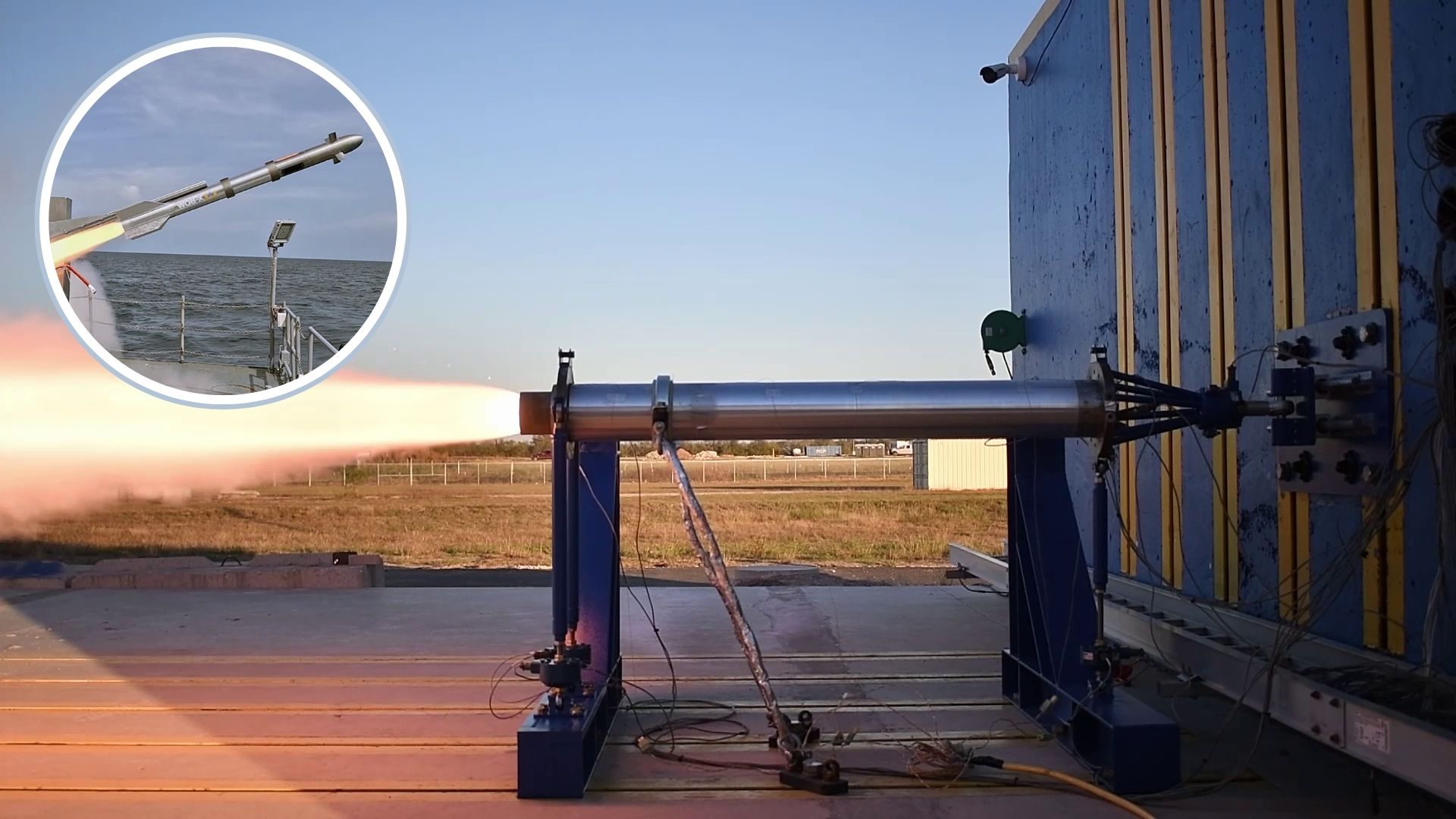
- The U.S. Missile Defense Agency awarded X-Bow Systems a $10,981,581 contract to develop and flight-test a Low-Cost Interceptor.
- The effort falls under MDA's Rapid Response Small Launcher Technology program and also supports MDA's broader Low-Cost Interceptor initiative.
- MDA seeks interceptor technologies that could bring costs below $750,000 per round.
- MDA wants technologies that could reduce the cost of intercepting ballistic, hypersonic, and cruise missile threats.
- A Patriot interceptor can cost around $2 million to $4 million each.
Compiled by The Product DeskSomething wrong?How this is made
Why it matters
The Missile Defense Agency has awarded X-Bow Systems $10,981,581 to develop and flight-test a Low-Cost Interceptor, a Phase II effort under the agency's Rapid Response Small Launcher Technology program that also supports MDA's broader Low-Cost Interceptor initiative, according to a report by Interesting Engineering [1][2][7]. The award is small; the requirement behind it is not, because MDA says it is looking for interceptor technologies that come in under $750,000 per round [3].
That figure is the whole point. MDA wants to cut the cost of intercepting ballistic, hypersonic and cruise missile threats [4], and the comparison it is implicitly making is to weapons like the Patriot interceptor, which the report puts at roughly $2 million to $4 million each [5]. A Patriot round therefore costs about 2.7 to 5.3 times the ceiling MDA is now naming [17]. This is not a capability specification with a price attached. It is a price specification with a capability floor, which is a different procurement instinct than the last two decades produced.
Operators should read the dollar value correctly. At the target price, the entire $10.98 million award buys roughly fifteen rounds [18]. Nobody is fielding a magazine here. What is being funded is development and flight testing of a proposed design [7], and the interesting variable is where X-Bow says the cost comes out of: propulsion. The company plans to build the interceptor's solid rocket motor in-house [6].
Solid rocket motors sit at the heart of many US missiles and interceptors, and the industry has long depended on a relatively small group of major suppliers [9]. Adding output is not a matter of adding a line; manufacturers need specialised facilities and technical expertise, and production does not rise overnight [10]. X-Bow's model puts interceptor development, motor manufacturing and flight testing under one roof, which means engineers can change propulsion without waiting on an outside motor vendor [11]. Founder and CEO Jason Hundley framed the problem bluntly: "America can't out-produce today's threats with yesterday's supplier base" [8].
There is a working precedent, at a much easier difficulty setting. X-Bow recently unveiled Buckler, a low-cost interceptor aimed at Group 3 drones that engages at supersonic speeds and has already been flight-tested, per the company, at a stated cost of under $100,000 [12]. X-Bow builds Buckler's airframe, motor and propellant itself [13], and uses fixed and deployable manufacturing systems across multiple programs [14]. Under $100,000 is less than a seventh of MDA's $750,000 ceiling [19], but a drone interceptor is a far smaller problem than one expected to address ballistic, hypersonic and cruise threats [20]. Cheap does not scale upward automatically.
The honest caveat is in the source material itself: not every threat can be handled by the same interceptor, and some missions will still require more sophisticated and more expensive weapons [15]. The case for cheap rounds is salvo arithmetic, having enough shots to sustain an engagement without exhausting inventories or budgets [16].
Watch the flight tests, and watch whether $750,000 starts appearing as a threshold in other MDA solicitations rather than an aspiration in one. Watch, too, whether competitors respond by bringing motor production in-house, because that is the part of the X-Bow pitch a prime cannot answer with a proposal.
Loading topic controls
Loading related stories