Loading today’s stories
Product2 distinct publishers3 min readUpdated
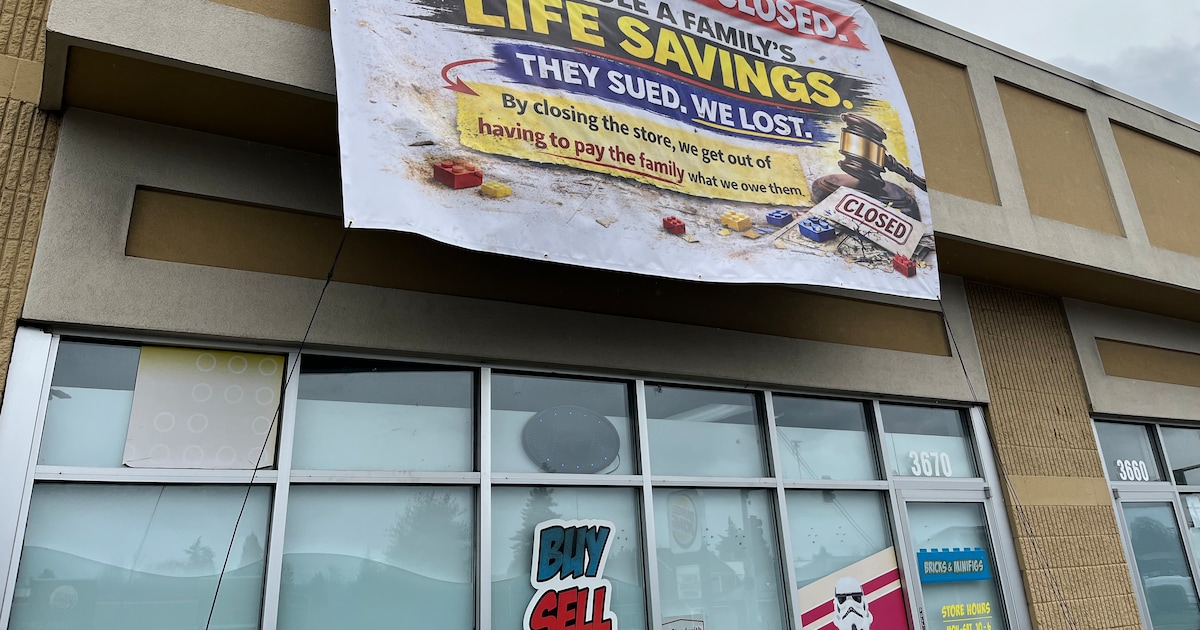
Bricks & Minifigs paid the bill it called a racket, then bought the right to sue for it
The franchisor settled with the Mansell family, apologised, and took an assignment of their consignment claims. The case it still runs against Ben Schneider now runs without its premise.
The Product Desk · Product desk
What happened
- BAM Franchising and the Mansell family announced a resolution in a joint statement on August 19, confirming the family had been compensated for losses connected to a consignment arrangement with a former operator of the Bricks & Minifigs Salem/Keizer, Oregon store.
- The parties said the settlement represents a compromise of disputed claims and does not constitute an admission of liability, wrongdoing, or unlawful conduct by BAM, the Mansells, or any other released party.
- Under the joint statement the Mansells agreed to release their legal claims against BAM, its leadership, Baker Salem, Josh Johnson, Brandon Best, and current Bricks & Minifigs franchisees.
- BAM, Ammon and Matt McNeff, Baker Salem, Johnson, and Best will dismiss their lawsuit against Bryan Mansell.
- As part of the settlement Bryan Mansell assigned his claims under the original consignment contract to BAM, which can choose to pursue those claims against parties it believes are responsible, with the Mansells agreeing to provide relevant records in support.
Compiled by The Product DeskSomething wrong?How this is made
Why it matters
The civil theory against Ben Schneider, as Techdirt describes it, was that he was running a shakedown scheme [10]. A theory like that needs an underlying demand that was not owed. What BAM's own release says is that the Mansell family "has been made whole by BAM for the losses associated with their consignment arrangement" [19], and the joint statement adds an unqualified apology for a genuine loss suffered after the original contract was not properly administered [8]. The same statement says none of it is an admission of liability or wrongdoing by any released party [2]. As drafting, that is ordinary. As evidence in the case that remains, a payment plus an apology sits on the record in a way a disclaimer clause does not remove.
There is a second oddity in the paperwork. BAM says it, Baker Salem, Josh Johnson and Brandon Best were never parties to the consignment contract [6], and that the losses arose in part from how the store's former operator sold, accounted for, stored and disposed of the inventory [7]. A set of non-parties paid the loss anyway, and then took an assignment of the contract claims [5]. That is the posture of a company that intends to collect from the operator, not one that concedes the debt was its own. It also has to be squared with the history Techdirt lays out: BAM corporate removed the previous franchisees, Chrystal Law Gorman and Ben Gorman, said it was taking over the consignment deal, and then argued that the remaining sets were legally its property and that the consignment was not real or not permitted [13]. The Gormans have said they could not pay because Johnson, Best and BAM corporate had taken over the receipts [15].
So the assigned claim is worth whatever the former operator can be shown to owe, minus everything the assignor's own publicist of record already established. Coffeezilla's accounting suggested the Gormans probably did owe the Mansells for sets that had sold, but also that BAM corporate and the replacement operators had likely misled people about which sets were still in their possession, and that the collection was not worth what the coverage implied [14][16]. Techdirt adds a title problem on top: it is not clear who owns Mansell's claims at all, since early in the saga he was reported to have given them to Schneider [12].
The part that should interest other franchise operators is procedural. BAM's own account says the resolution followed an extensive legal and mediation process in which the parties exchanged records [18], and that it regrets not getting to the information it needed sooner [8]. Those records concerned a consignment at a store BAM took control of, and the RICO complaint against the consignor was filed while chief executive Ammon McNeff was saying he wanted to make Mansell whole [17]. The Gormans had sued BAM corporate; BAM's answer was to sue broadly under RICO [9]. Reading the file ended the Mansell dispute. Reading it was available before the pleadings, not only after them.
Loading claim ledger
Loading source directory links
Loading share composer
Loading topic controls
Loading related stories