Loading today’s stories
Product1 distinct publisher3 min readUpdated
AUKUS gets a delivery office: Amentum and Laing O'Rourke to sit inside Australia's Osborne build
Australian Naval Infrastructure has named a joint venture of US firm Amentum and Laing O'Rourke as Capability Partner for the Osborne submarine yard, placing it inside the government delivery office.
The Product Desk · Product desk
What happened
- Australia has selected a joint venture involving U.S. engineering firm Amentum and Laing O'Rourke to help deliver a major new shipyard for its future nuclear-powered submarine fleet.
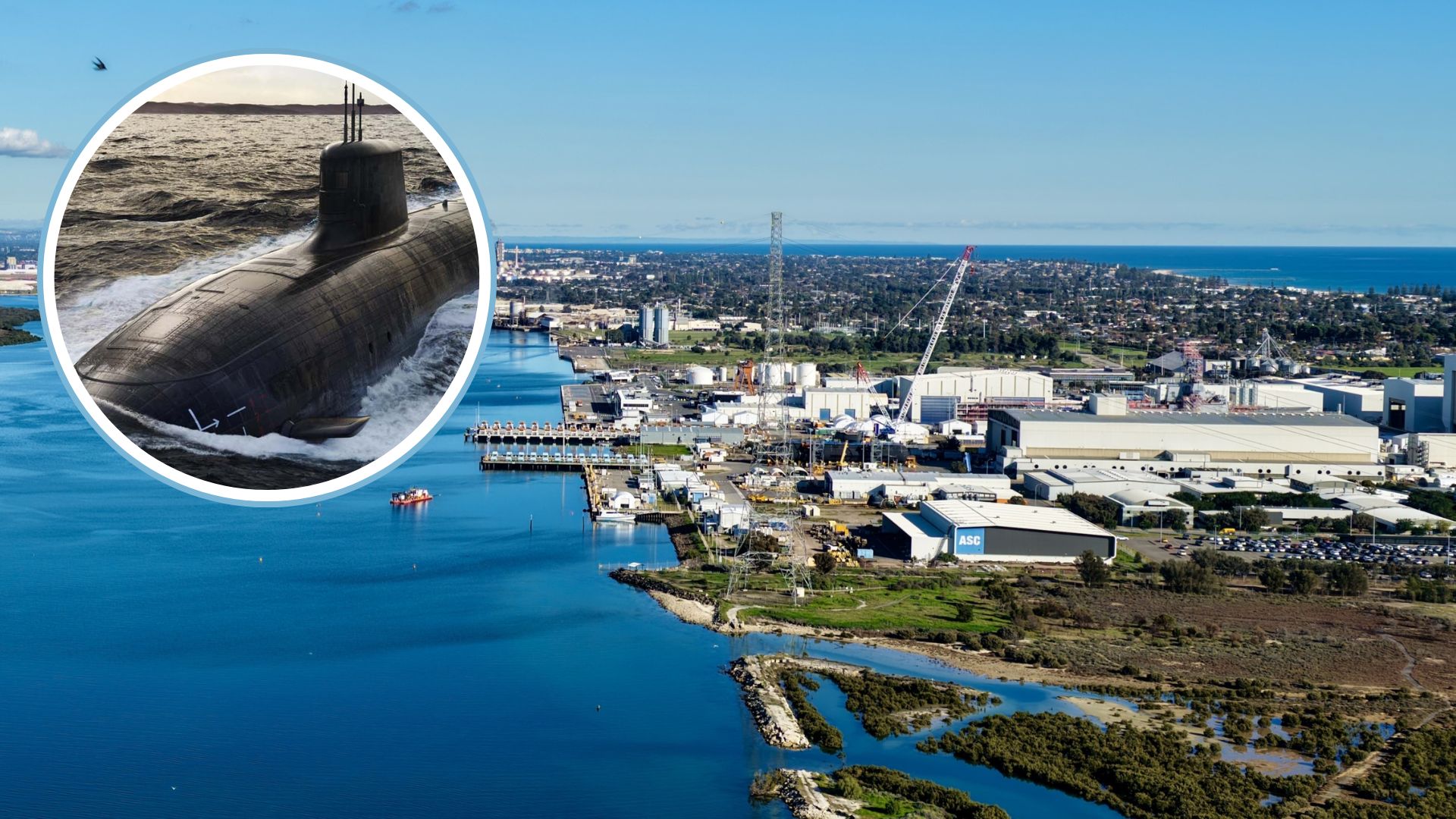
- Australian Naval Infrastructure named the Amentum and Laing O'Rourke partnership as its Capability Partner for the construction yard at Osborne, near Adelaide in South Australia.
- Amentum and Laing O'Rourke will work inside ANI's Integrated Delivery Office under a long-term arrangement.
- The partners' team will help manage the nuclear-related elements of the program, oversee construction activities and provide safety leadership.
- The partners will coordinate work packages and support engagement with contractors across the expanding project.
Compiled by The Product DeskSomething wrong?How this is made
Why it matters
Australian Naval Infrastructure has named a joint venture involving the US engineering firm Amentum and Laing O'Rourke as its Capability Partner for the submarine construction yard at Osborne, near Adelaide in South Australia [1][2]. The consequential detail is not the logo on the announcement but the seating plan: the partners will work inside ANI's Integrated Delivery Office under a long-term arrangement, rather than outside it as a vendor bidding for packages [3].
That placement defines the job. According to the announcement, the team will help manage the nuclear-related elements of the program, oversee construction activities and provide safety leadership [4]. It will also coordinate work packages and support engagement with contractors across the expanding project [5]. The problem singled out as the hard one is managing the interfaces between nuclear and conventional construction areas [6]. Anyone who has run a regulated build knows what that sentence is doing: it is where schedule slips are manufactured, because a boundary between a nuclear-licensed zone and an ordinary industrial zone is a paperwork boundary, a training boundary and a rework boundary all at once.
Osborne is to become Australia's first dedicated construction site for conventionally armed, nuclear-powered submarines [7], and it will need specialised infrastructure for submarine assembly, outfitting, testing and commissioning [8]. The site is already a major centre for Australian naval construction, and the new yard is described as significantly expanding that role [9]. The boats themselves, SSN-AUKUS, are expected to displace around 10,000 tons, well above Australia's current conventionally powered fleet [10]; the fleet is to be nuclear-powered without nuclear weapons [11].
Amentum's stated qualification is decades of experience on nuclear submarine programs, including nuclear licensing and work alongside independent regulators [12]. Mark Whitney, president of Amentum Energy & Environment, called it a chance to be part of "a once-in-a-generation national endeavor" [13]. Kim Katheklakis, Amentum Australia's managing director, said the team's responsibilities will include governance, logistics, commissioning and digital engineering, with supply-chain quality a major part of the effort [14]. Read past the framing and that is a list of functions ANI has decided not to staff itself, at least not yet.
What the reported announcement does not contain is a contract value, a term in years, or dated construction milestones [17]. Without those, the arrangement is a governance decision rather than a measurable commitment, and it should be judged as one.
Three things worth tracking. First, whether the interface management actually produces a single licensing and safety-case regime for the site, since Australia still has to build regulatory expertise, specialised supply chains and a workforce capable of supporting nuclear submarine construction over several decades [15]. Second, whether the promised skilled jobs in South Australia materialise as trained nuclear-relevant trades rather than headcount, given that the broader AUKUS effort is expected to create thousands of them [16]. Third, the balance of authority inside the Integrated Delivery Office: a foreign partner holding safety leadership and nuclear scope [4] is the fastest route to competence and the slowest route to sovereign capability, and which of those Osborne ends up with will show in who signs the commissioning documents.
Loading topic controls
Loading related stories