Loading today’s stories
Product1 distinct publisher3 min readUpdated
YASA takes UK state money to design magnet risk out of the motor, not around it
The axial flux specialist will pursue two rare-earth-reduction routes under DRIVE35. The announcement names a supplier and an architecture, but no money, no date and no power-density figure.
The Product Desk · Product desk
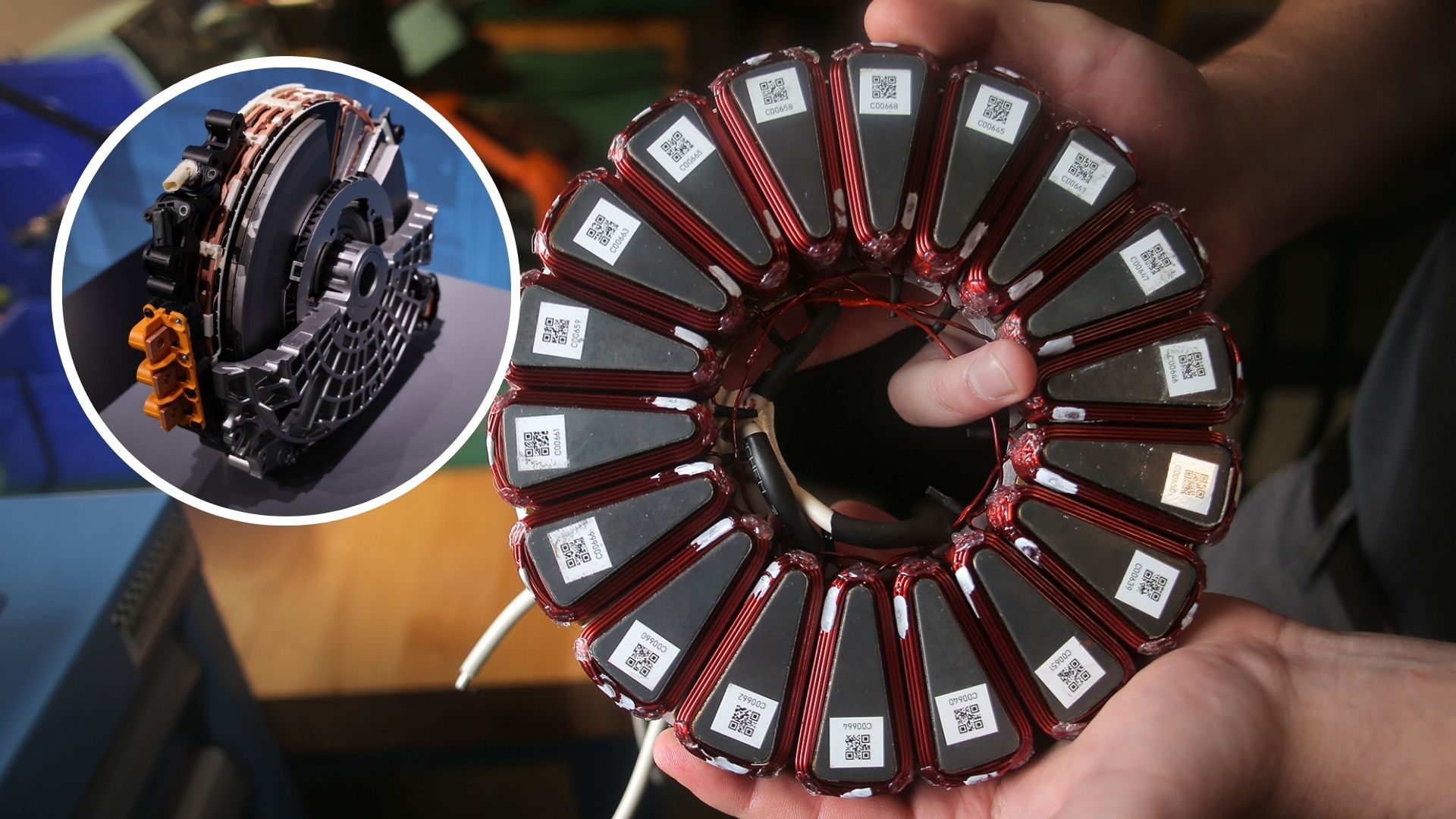
What happened
- A British company, YASA, is set to develop a new generation of fully rare-earth-free and heavy-rare-earth-free axial flux electric motors.
- YASA has secured UK government funding to develop these motors.
- As part of the programme, YASA will lead Project Resilience, investigating two complementary technology pathways designed to reduce reliance on rare-earth magnet materials while preserving the power density, efficiency and compact packaging required by future electrified vehicles.
- YASA states that rare-earth permanent magnets are widely used in high-performance electric motors but their supply chains are highly concentrated geographically, which can expose automotive manufacturers and suppliers to geopolitical uncertainty, export restrictions, price volatility and potential disruption as global demand for electric motors increases.
- YASA states that heavy rare earths are commonly used to help permanent magnets withstand the high temperatures and demanding operating conditions inside powerful electric motors, but that these materials can be particularly difficult and carbon-intensive to extract and process.
Compiled by The Product DeskSomething wrong?How this is made
Why it matters
British motor maker YASA has secured UK government funding to develop axial flux electric motors that are both fully rare-earth-free and heavy-rare-earth-free, under a programme it will lead called Project Resilience [1][2][3]. That matters to anyone specifying an electrified drivetrain because it moves magnet supply exposure out of the procurement column and into the motor design brief, where it becomes a set of engineering constraints somebody has to meet.
The stated framing is supply concentration. YASA says rare-earth permanent magnets are widely used in high-performance motors but their supply chains are highly concentrated geographically, exposing manufacturers and suppliers to geopolitical uncertainty, export restrictions, price volatility and disruption as demand grows [4]. The company also notes that heavy rare earths are commonly used to keep magnets stable at the high temperatures inside powerful motors, and that those materials are difficult and carbon-intensive to extract and process [5]. Those are two different problems: one is availability, the other is thermal performance. Removing the second ingredient without losing the first property is the actual work.
YASA is not claiming a single answer. Project Resilience will pursue two complementary technology pathways aimed at cutting reliance on rare-earth magnet materials while preserving the power density, efficiency and compact packaging that electrified vehicles require [3]. Tom Hillman, YASA's Head of Motor Simulation, said different applications need different balances of performance, efficiency, packaging, cost and production volume, which is why the company is developing two routes rather than one universal solution [6]. That is a more honest position than a single-architecture promise, and it also tells buyers something practical: the rare-earth-free option and the high-performance option may not be the same part.
Only one route is described in any detail. For high-performance battery-electric and hybrid vehicles, YASA will investigate heavy-rare-earth-free permanent-magnet designs intended to maintain high power density without increasing motor mass or package size [7]. That is the specification that matters for anyone doing a swap study, because mass and volume are where substitution usually costs you. Hillman said the axial flux architecture is the platform for exploring these technologies while continuing to deliver the power density that defines YASA's products [8].
The funder frames this as a route to production rather than a research exercise. Ian Constance, Chief Executive of the Advanced Propulsion Centre UK, said DRIVE35 is supporting businesses to move promising technologies to commercial deployment and manufacturing at scale, and described the wider investment as strengthening UK capability to design, develop and build future vehicle technologies [9][10]. YASA's motors are described as intended to power future electric and hybrid vehicles [11].
What is missing is the part an operator would actually plan against. The announcement as reported carries no funding amount, no programme start or end date, no sample or production milestone, and no numeric power density, efficiency or temperature target for either pathway [12]. Until those appear, this is a named supplier and a stated design intent, not a line item.
Watch for the two pathways to be distinguished publicly, for a heavy-rare-earth-free magnet chemistry or a wound-field alternative to be identified, and for any figure attached to the DRIVE35 award and its timeline.
Loading topic controls
Loading related stories