Governor Josh Shapiro has released the full text of Pennsylvania's Governor's Responsible Infrastructure Development Standards, which require any data centre developer seeking Commonwealth support to file a joint application for GRID Certification with the Office of Transformation and Opportunity and the Department of Revenue, setting out how it will meet four standards: protecting energy affordability, promoting transparency and community engagement, supporting workforce and economic development, and protecting the environment [1][3]. The reason to read it closely is that nobody is being fined: the state is deciding in advance who is eligible for permitting speed and tax relief, and the tax relief at issue is projected to cost more than $517 million a year by FY 2030-31 if left unchanged [4][7].
A note on the assignment, because it is load-bearing. This desk was briefed to examine a remedy list from state attorneys general said to demand feature deletions rather than damages. The material supplied contains no such filing, no attorney general, and no litigation of any kind: it contains the Pennsylvania release, an Apple hardware leak, a vendor-partnered enterprise data survey, a Google Cloud product page, a Guardian essay on the history of computing, a Guardian feature on Palaeolithic cave art, and a dinosaur database [3]. So this piece is about the instrument that is actually documented, which happens to be the same species of thing: a government expressing its objections as a requirements document instead of a bill.
What the gate actually controls
The GRID Standards divide into two levers of very unequal strength. If OTO and the Department of Revenue accept an application, the project receives GRID certification and becomes eligible for OTO's PA Permit Fast Track Program, which streamlines permitting for projects that need approvals from multiple Commonwealth agencies [4]. That lever is entirely inside the executive branch. The second lever is not. Data centre developers already have to be certified through the Department of Revenue to qualify for the sales and use tax exemption on computer data centre equipment under Act 25 of 2021 [5], and to bind that exemption to the new standards the administration has to ask the General Assembly to pass legislation amending the tax benefit so that GRID certification becomes a condition of eligibility [6]. Until that happens, the standards are enforced by the things a governor can grant directly, and the half-billion dollars a year sits behind a legislative vote [4].
The release is also thinner than it looks on the mechanics of the money. It states that if left unchanged the exemption is projected to cost more than $517 million annually by FY 2030-31, and that the administration's proposal "would require GRID applicants to use that revenue to invest in key public priorities", listing education, the environment, infrastructure, public safety and workforce development [7][8]. Read as written, the subject of that sentence is the applicants and the object is the Commonwealth's forgone revenue, which is not a mechanism so much as a placeholder for one. The framing matters because the political case is explicitly about household exposure: Shapiro says he has heard from Pennsylvanians concerned about the effect of data centre development on their communities, the environment and their utility bills, and that companies wanting the state's full support must meet strong standards on energy affordability, clean energy generation, transparency, workforce development, community impact and environmental protection [9].
The hardest commitment in the package is a sentence from a secretary, not a standard. Department of Community and Economic Development Secretary Rick Siger says the standards require developers to pay entirely for their own energy needs, meet the state's environmental requirements, create local jobs and deliver millions in additional tax revenue to cities, townships and boroughs, and that Pennsylvania is positioned to be selective about which projects it takes [10]. "Pay entirely for their own energy needs" is the clause that would decide whether any of this changes a ratepayer's bill, and it is the clause most in need of a definition. The standards were developed with input from local leaders, organised labour, industry and environmental stakeholders [11], and the supplied text of the release breaks off mid-sentence saying that OTO will post detailed information; within that text there is no description of penalties, revocation or clawback if a certified project misses its commitments [12]. That absence may be filled elsewhere. As published in the material available here, certification is a gate you pass once.
The buyers describe their bottleneck somewhere else
Set the Pennsylvania document next to the demand it is meant to govern and the two do not point at the same constraint. An MIT Technology Review Insights report produced in partnership with Google Cloud reports that more than two out of every three organisations plan to deploy AI agents widely within two years, while AI today can access an average of 45% of enterprise data [13][14]. Over half of executives, 55%, say their current data systems actively prevent them from scaling agentic AI across the enterprise [15]. The report sorts respondents by access: "data leaders" give agents more than 70% of their data and scale more easily, "data laggards" sit under 30%, and among the leaders 100% report "consistently" or "mostly accurate" agent decisions [16]. On the report's own numbers, the average organisation sits at least 25 percentage points below the threshold it uses to define a leader [1].
Two cautions. The diagnosis is published in partnership with the vendor that sells the remedy: Google Cloud markets a single platform for agent development, orchestration and governance under the Gemini Enterprise Agent Platform name, alongside a $300 welcome credit for new users, free usage of more than 20 products, 35 monthly credits through its Gemini Enterprise Agent Ready programme, and up to $350,000 in credits for early stage funded startups [18][2]. And the report's named practitioner voices come from Shopify, Deutsche Telekom and HCA Healthcare [17], which is to say large firms with the sort of data estates the framework flatters. Neither document references the other. But if the binding constraint on agent deployment is governance and access inside the customer's own systems, as more than half of those executives say it is [15], then a state writing conditions on power, environment and local revenue is regulating the part of the stack that is easiest to point at and not the part its customers describe as the blocker.
The consumer end is being specified at the same time
The other thing that surfaced in the supplied material is what the sensing layer looks like when it ships. MacRumors found a demonstration video inside the macOS Tahoe 26.7 release candidate showing camera-equipped AirPods: a man holds a book up so the camera can read the title, over a voiceover that says "With Visual Intelligence, your world becomes savable. See something you like? Just ask me to save it for later" [19]. The camera feeds Visual Intelligence, and Siri is to answer questions about the wearer's surroundings and log information, with a direct reference to setting up Visual Intelligence on the AirPods themselves [20]. The design detail worth keeping is the error state: if hair covers the AirPods the wearer gets an alert reading "To get the most accurate information about things in your environment, make sure AirPods are not covered" [21]. A product whose failure mode is occlusion is a product that assumes capture is the resting state. The device carries the codename B790, which Bloomberg's Mark Gurman has also cited, and Gurman has suggested a launch as soon as September, potentially at the event where Apple is expected to unveil the iPhone 18 Pro, iPhone 18 Pro Max and a foldable iPhone Ultra [22]. macOS Tahoe 26.7 also carries multiple further mentions of B790 and references to a long list of other unreleased products [23]. None of that came from an announcement. It came from shipping software, which is now a disclosure channel whether or not the vendor intends it to be.
Why a checklist is the interesting artefact
The Guardian's long read on the birth of the digital age argues that the present was not inevitable, and that people issued warning after warning about the rise of what its author calls the artificial state: the replacement of the liberal democratic nation-state and the consent of the governed with rule by machines [24]. The specifics are older than the current wave. At a 1958 conference on the "mechanisation of thought processes" at the National Physical Laboratory in Teddington, speakers described computers that would one day compose music, resolve legal disputes, control air traffic, conduct surgery and, in government, replace not only clerks but executives [27]. That same year the Madison Avenue advertising executive Edward L Greenfield proposed a "People Machine" built from hundreds of thousands of punch cards of election returns, opinion surveys and census data, an "information bank" that would sort voters by type and their opinions by issue and act as a "macroscope" simulating the whole US electorate; Greenfield and the MIT political scientist Ithiel de Sola Pool wrote that once the information was inside the machine's high speed storage "it is a different world" [28]. In 1959 they and IBM's Alex Bernstein incorporated Simulmatics [29]. By 1981 the Japanese sociologist Yoneji Masuda was framing the choice as computopia or a "compudystopia" he called the automated state, while noting that both paths had already led humans to neglect coexistence with nature [26]. Between the 1950s and the 1980s, as computing moved from the military into industry, business and medicine, chunks of public life became automated, including the work of rallying support, running campaigns, communicating with constituents and crafting policy [25].
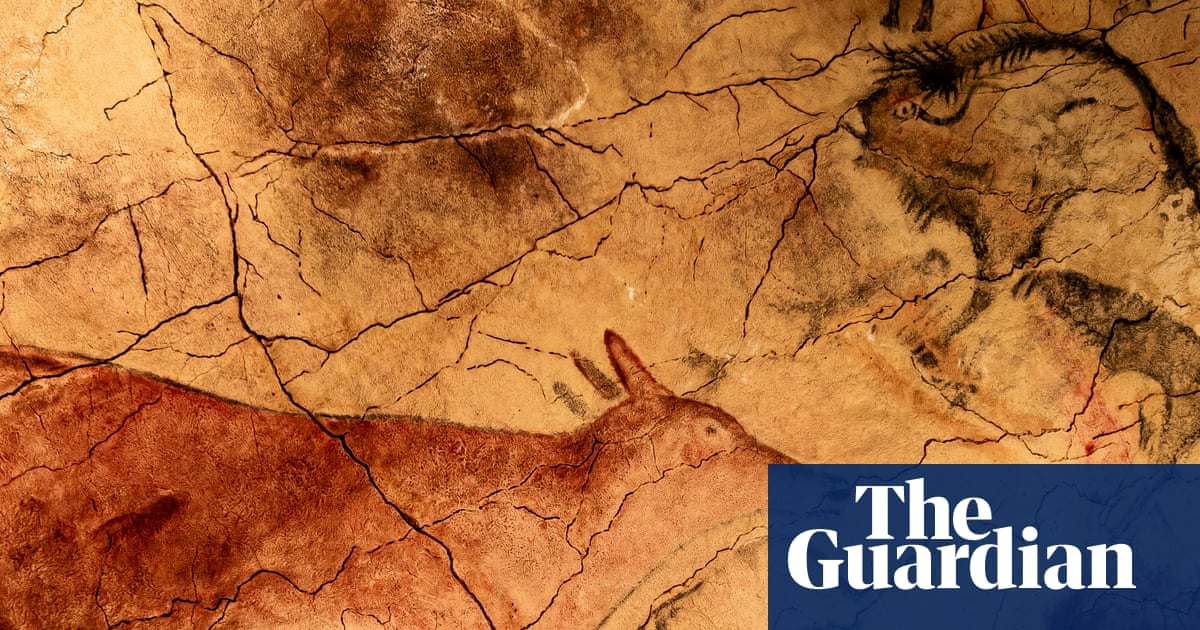
The through line is that warnings, essays and conference papers accumulated for decades without becoming conditions. The Pennsylvania document is what a warning looks like once it is converted into an eligibility criterion: not an argument about whether ambient capture and agent deployment are good, but a form that a developer either completes to the state's satisfaction or does not. Compare the alternative timing. Altamira was opened to the public in 1917, partly closed in the 1970s, and shut for good in 2002, after roughly a century of visitors' moisture and carbon dioxide were found to be stripping the paint; a replica cave was built next door, and access to the original is now limited to a handful of scholars [31]. Access control after measurable damage produces a replica. Pennsylvania is attempting the same control before the fact, which is cheaper if it works and unenforceable if the definitions are soft.
Three things decide which of those it is. Whether the General Assembly amends Act 25 of 2021 so that certification actually gates the exemption [5][6]. Whether OTO's detailed criteria define "pay entirely for their own energy needs" in a way an auditor could test, given that the published release stops before that detail and describes no post-certification enforcement [10][12]. And whether any of this reaches the layer that is being specified in parallel, where a wearable camera's advertised virtue is that your world becomes savable and its warning label is about not covering the lens [19][21].