Published · 15h agoLeadership7 min read
The Commissioned Angle Had No Sources. What the Material Did Have Was a Capacity Problem
The brief named two suppliers, a 60-day pricing window and an automated shutdown rule. The supplied sources are about a monk, dinosaur pictures and a sealed cave in northern Spain.
Context for builders, not their beat.See today for builders
What happened
- Source s1 is a Guardian lifeandstyle interview with the Buddhist monk Yongey Mingyur Rinpoche about his strategies for a richer life; Rinpoche is an honorary title meaning roughly 'precious one'.
- Source s2 is the homepage of DinosaurPictures.org, which describes itself as the internet's largest dinosaur database and offers dinosaur names, pictures and facts by region.
- Source s3 is a Guardian science feature about the Palaeolithic cave paintings at Altamira in northern Spain and related cave-art research in the Basque Country.
- None of the three supplied sources mentions an AI or technology supplier, a 60-day pricing window, a safety alert backlog, or an automated shutdown rule.
- About 34,000 years ago, early Homo sapiens began making frescoes with chiaroscuro effects through the subterranean vaults of Altamira, which remained in use for many millennia until the cave mouth was sealed by a rockfall.
Compiled by The Board RoomSomething wrong?How this is made
Why it matters
The angle assigned to this desk was a shift at the top of the frontier model market: two motivated suppliers opening a 60-day pricing window, and a new automated shutdown rule that converts a vendor's safety alert backlog into a customer's outage risk. That sentence carries no citation, because the material supplied to report it consists of a Guardian interview with the Buddhist monk Yongey Mingyur Rinpoche [1], the homepage of DinosaurPictures.org [2] and a Guardian feature on the Palaeolithic paintings at Altamira in northern Spain [3], and none of the three mentions a supplier, a pricing window or a shutdown rule of any kind [4].
So the commissioned piece is not below. To write it, this desk would have to supply the vendors' names, the window's start and end dates, the text of the rule and the owner of the alert queue from memory, and a number recalled rather than sourced is indistinguishable to the reader from a number invented. An operator who acts on procurement timing has a right to know which claims were checked. None of these were, because there was nothing to check them against.
What the material does contain, read the way an operator reads a post-mortem, is a well-documented case in a resource class most organisations handle badly: capacity that is consumed by being used, and that cannot be restocked.
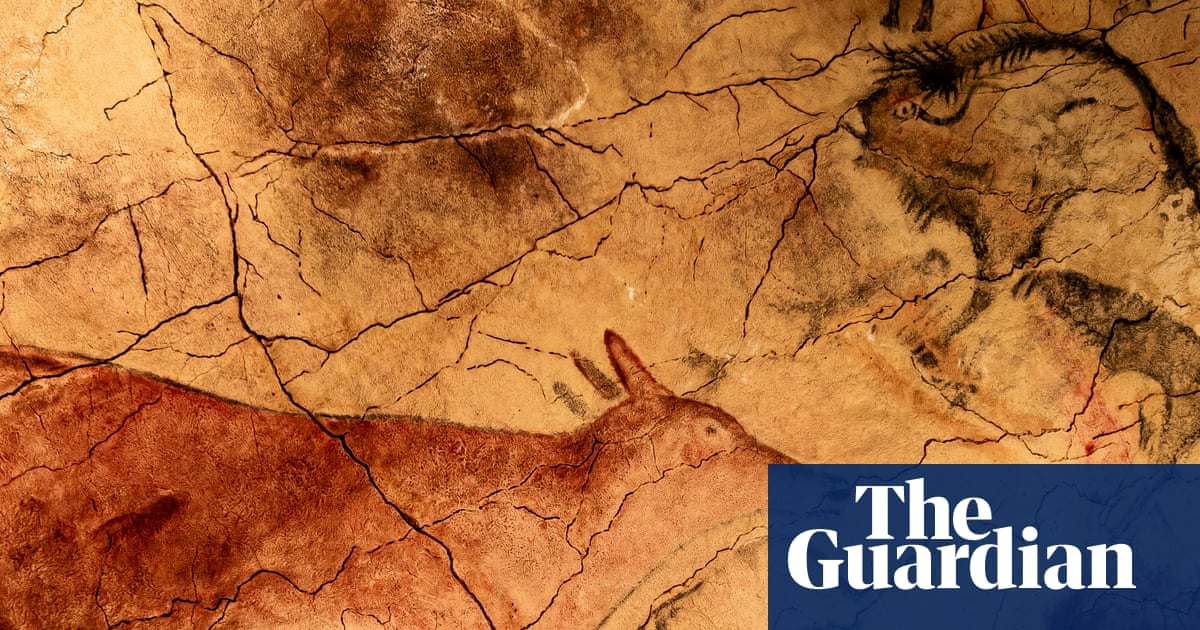
Altamira's paintings were begun about 34,000 years ago, made with chiaroscuro effects across a suite of subterranean vaults that stayed in use for many millennia until a rockfall sealed the cave mouth [5]. The Guardian's account is explicit about the reason the reds and blacks are still solid and vivid: the landslide imposed near-quarantine conditions [6]. The asset was preserved by being inaccessible. A gun dog clawed across the threshold in 1868, leading a succession of witnesses into the first prehistoric gallery of its kind seen by modern eyes [7].
Then comes the operating history that matters. The site opened to the public in 1917, was partly closed in the 1970s, and shut for good in 2002, after roughly a century of admiration revealed the paint-stripping effects of moisture and carbon dioxide from the breath of too many beholders [8]. That is 85 years between opening and final closure [11]. The mechanism deserves precision: the depletion vector was not vandalism, theft or neglect. It was demand being served as designed. Every visitor made a small withdrawal in the form of exhaled water and CO2, and the withdrawals aggregated into damage that no maintenance budget reverses [8].
Note the sequence in that account. The response was staged: restrict partially in the 1970s, then close entirely three decades later [8]. A throttle was tried first and the asset still ended up offline. Alongside it, a replica cave with replica artwork was built on an adjacent site [9], and access to the original is now limited to a small number of named scholars, among them Diego Garate Maidagan, professor of prehistory and Palaeolithic art at the University of Cantabria, who had been inside as recently as the week before he met the Guardian's writer [13]. Demand was not reduced. It was redirected to a copy, while the primary was taken out of general service. Anyone who has moved reporting traffic off a production database will recognise the shape of the fix, and also the cost: the copy is a different artefact, and only the original tells you about the etching technique in which flint blades outlined the figures before ochre and charcoal was applied [14].
The second thing in this material is a warning about evidence. The current thinking Garate describes is that early painters worked their way across western Europe, and that what we now call cave art is only what happened to survive on the deepest, darkest surfaces they touched [17]. In most caves the pigment is gone, eaten by creeping bacteria, effaced by sheets of calcite, or scoured away by air and water, leaving vestigial chisel marks tracing legs, horns and tusks [18]. The surviving record is therefore a sample selected by storage conditions rather than by what was produced. Any operator who reasons from a data set retained on the cheapest available medium is reading the same kind of sample and usually does not say so.
There is a third failure in the file, and it is a failure of expert priors. When Altamira surfaced, self-appointed experts from France declared the whole thing a hoax, because the technique looked too sophisticated for the primitives that Palaeolithic people were then assumed to be, and those accusers were embarrassed when comparable caves turned up in their own country [15]. The artefact was not misread. The model of the producer's capability was wrong, and the artefact was rejected for failing to match it. The Guardian is careful to note that even the famous verdict attributed to Picasso, "After Altamira, all is decadence," may be apocryphal [16], which is the right way to handle a quote everyone repeats.
The most transferable part of the material is how Garate's team dealt with a hard constraint on scarce expert attention. Faint proto-images of this kind are very difficult to see without expert intervention, in the way that shadow pictures beneath canvases by Titian or Caravaggio need X-rays [19]. Garate and colleagues in Santander wanted to test the theory that caves across northern Spain and south-western France were once lavishly decorated with pictograms and petroglyphs now barely visible to the untrained eye [24]. His stated constraint is exact: there were only three people in his department, and each would need three lifetimes to explore all those caves [20]. That is nine lifetimes of work against three working careers [21].
The response was not to ask for headcount. They consulted, enlisted and effectively deputised a taskforce from the Union of Basque Speleologists, and taught the cavers to angle their head torches a certain way and adjust their gazes just so [22]. The reason it works is worth stating plainly, because it is the part that transfers: the volunteers already possessed the expensive, slow-to-acquire capability, which is getting safely into difficult caves, and lacked only the cheap, teachable one, which is knowing what to look at. The academics distributed the perceptual skill and kept the interpretation. Garate describes the result in the far north of the Basque Country as "a little revolution", and the Guardian notes in the same breath that he is the main instigator [23], so that assessment is self-scored and should be read as such.
The dinosaur site is the same pattern at a different scale, and it says so on its front page. DinosaurPictures.org is built on PaleoDB, a scientific database assembled by hundreds of palaeontologists over the past two decades [25]. The consumer-facing product curates illustrations, directs all credit to the original authors and creators, and invites submissions [26]. The layer that receives the traffic is not the layer that carried the twenty years of cost, and the interface is only as good as the distributed contribution beneath it. That is an accurate description of a great deal of modern software procurement, and the honest ones acknowledge the dependency.
The monk interview is the thinnest of the three, and its own hedges say why. Its central measurement claim is that brain scans showed off-the-charts activation in the left prefrontal cortex, an area associated with positive emotions, and that in tests at 41 his brain reportedly resembled that of a 33-year-old [28]. "By some metrics" and "reportedly" are the publisher's words, and they carry the weight. The one usable operational point is about how change tolerance is built. Mingyur's own formative episode was involuntary: he left his monastery in 2011 with nothing but the clothes he was wearing, intending to live as a homeless yogi, and about three weeks later severe food poisoning left him paralysed by exhaustion and pain for days, which he now identifies as the point at which he began to understand relinquishing control [29]. Asked whether the lesson is available without the ordeal, he says it is, through ordinary changes such as a new route home or an unfamiliar ingredient [30]. He also frames practice as three pillars, of which the third is application, meaning habits repeated until they hold [32], and describes building noise tolerance in graded steps, from music to waterfalls and birdsong to construction and loud conversation [33]. Deliberate small exposure in advance, rather than a large involuntary one later, is a resilience argument that does not require the brain scan to be true. The same piece cites a study suggesting that flicking between social media videos makes people more bored, not less [31], which is a reminder that the intuitive remedy sometimes runs the wrong way.
What to watch is the reporting gap, not the market. This desk will write the frontier-supplier piece when the material contains the suppliers' names, the dates on which the window opens and closes, the published text of the automated shutdown rule, the party that owns the alert queue it draws from, and whether any contract makes the vendor's backlog an excused outage. Until then, the only defensible statement about a 60-day pricing window is that nothing supplied here documents one [4].
Claim ledger
Ranked by verification strength, evidence, and original report placement.
- [1]
Source s1 is a Guardian lifeandstyle interview with the Buddhist monk Yongey Mingyur Rinpoche about his strategies for a richer life; Rinpoche is an honorary title meaning roughly 'precious one'.
ReportedView cited source - [2]
Source s2 is the homepage of DinosaurPictures.org, which describes itself as the internet's largest dinosaur database and offers dinosaur names, pictures and facts by region.
ReportedView cited source - [3]
Source s3 is a Guardian science feature about the Palaeolithic cave paintings at Altamira in northern Spain and related cave-art research in the Basque Country.
ReportedView cited source - [5]
About 34,000 years ago, early Homo sapiens began making frescoes with chiaroscuro effects through the subterranean vaults of Altamira, which remained in use for many millennia until the cave mouth was sealed by a rockfall.
ReportedView cited source - [6]
The reds and blacks at Altamira were preserved in the near-quarantine conditions imposed by the long-ago landslide.
ReportedView cited source - [7]
In 1868 a curious gun dog clawed its way across the threshold of Altamira, leading a succession of witnesses into the first such prehistoric gallery ever seen by modern eyes.
ReportedView cited source
Sources & coverage · 2 publishers
The reporting this story was synthesized from, earliest first. Every link goes to the original.
- dinosaurpictures.orgyesterdaythe internet's largest dinosaur database
- theguardian.comyesterdaySpain’s astonishing cave paintings
- theguardian.com17h agoshared nine of his biggest life lessons